 Barone Defense Firm Home
Protect Your Future Don't Let One Moment
Define You. With the right defense, you can win back your life
and confidently move forward.



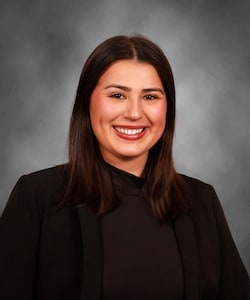
Havanna Gracia
Havanna Gracia joined the Barone Defense Firm in 2026 as a law clerk following her graduation from Michigan State University College of Law. She sat for the Michigan bar examination in July 2026 and anticipates admission in November, after which she will represent clients charged with operating while intoxicated and people seeking restoration of their driving privileges before the Michigan Secretary of State.
Ms. Gracia is currently working through an intensive in-house training program under Patrick Barone and Ryan Ramsayer covering the forensic and legal foundations of Michigan OWI defense. The curriculum addresses infrared spectroscopy and the operation of the Intoxilyzer 9000, together with the administrative rules and record-keeping protocols that changed when Michigan replaced the DataMaster DMT; gas chromatography and the interpretation of blood alcohol results; alcohol pharmacology, absorption, and metabolism; the standardized field sobriety tests and the NHTSA protocols that govern how they are administered and scored; and the construction of Michigan's operating-while-intoxicated statutes alongside the implied consent and license sanction provisions that run parallel to the criminal case.
Ms. Gracia came to criminal defense through the file room rather than the lecture hall. She first shadowed a criminal defense attorney at sixteen, worked as a legal secretary while still in high school, and earned bachelor's degrees in both criminal justice and paralegal studies from the University of Toledo as a first-generation college student. That training shows in how she works her client files.
A great deal of what decides a Michigan OWI case is documentary, all of which requires comprehensive discovery. The breath test report handed to a driver at the station is the beginning of the record but the most important documentation and information sits in records of the instrument's internal memory, in the Michigan State Police COBRA data, and in the maintenance, biannual certification, dry gas standard, and operator recertification records that have to be demanded through the court supervised discovery process and Freedom of Information Act requests drafted with enough specificity to include the instrument's serial number, the report number, the date and location of the test, the individual who adminstered it, and their training records. It includes the histograms generated for test attempts that never make it into the packet the prosecutor typically.
Ms. Gracia builds those requests, tracks what comes back against what was requested, and identifies what is missing, which is where most challenges to breath test evidence begin.
Similarly, when the driver's blood was tested, she prepares a detailed and comprehensive Freedom of Information Act demand to the Michigan State Police toxicology laboratory for the case file behind the one-page report, including the chain of custody, the laboratory's procedures and maintenance records, and the chromatograms for the entire analytical run rather than the client's sample alone.
Reading those chromatograms is the applied version of the gas chromatography she has been studying, and it is the only way to learn not just how a number was produced but why it might be wrong. The one-page toxicology report in the prosecutor's standard discovery package will never show that, so the defense, if there is one, sits in the underlying file, unfound unless someone requests it. That is unglamorous work, and it is also the whole point, because a number no one has tested is what costs a person his license, his job, and the life he had before the stop.
Ms. Gracia earned her law degree at Michigan State University College of Law, where she represented indigent clients through the Kalamazoo County Public Defender's Office, worked for private criminal defense firms, assisted families through the Chance at Childhood clinic, and served as a judicial extern to the Honorable Rosemarie Aquilina of the Ingham County Circuit Court.
Education. J.D., Michigan State University College of Law. Bachelor's degrees in criminal justice and paralegal studies, University of Toledo.
In Her Own WordsAlmost everyone who walks through the door at the Barone Defense Firm has never been in trouble before. They are frightened, they are embarrassed, and they are convinced that the worst night of their life is now the only thing anyone will ever know about them. I take that seriously, because the first courtroom I ever walked into belonged to someone in exactly that position.
I was sixteen when a criminal defense attorney invited me to shadow her for a day. I expected a performance. What I saw instead was a lawyer standing next to a man who had no one else standing next to him. I started working as a legal secretary before I finished high school, and after that the question was not whether I would do this work but how soon.
I grew up in Delta, Ohio, and I was the first person in my family to go to college. During my junior year at the University of Toledo I was allowed to sit at counsel table during a criminal trial. I remember the waiting more than anything else, and I remember watching the man beside me when the foreperson read the words not guilty. He was not thinking about the verdict. He was thinking about going home to his family. That is the moment I work toward. Most of the work that gets a person to that moment happens months earlier, at a desk, in a file nobody else bothered to ask for.
At Michigan State University College of Law I spent my time where the clients were. I worked with the Kalamazoo County Public Defender's Office, where the volume teaches you quickly that people arrive in court carrying far more than a charge. I helped families through the Chance at Childhood clinic. I externed for the Honorable Rosemarie Aquilina of the Ingham County Circuit Court, which taught me how a case looks from the bench, and how much of what persuades a judge happens long before anyone stands up to argue.
I have learned from lawyers who were feared in a courtroom, and what I took from them was their preparation rather than their reputation. Confidence in front of a jury is built in the weeks nobody sees.
I had other options when I left law school. I chose the Barone Defense Firm because of how they talk about the work here. Not about beating charges, though they do that, but about helping people win back their lives. That phrase sounded like marketing to me until I watched what it meant in practice, which is that the question is never only what happens to the case. It is what happens to the person afterward, and whether he gets to go back to being who he was before the worst night of his life.
When someone walks into this office after being arrested, here is what I want them to know. I will listen to the whole story, not only the portion the police report contains. I will hear the truth about what they are facing rather than what they want to hear. And no one sits in that courtroom alone.



 Your Privacy Choices