Search
 Michigan Criminal Defense Lawyer Blog
Federal Firearm Rights Restoration Returns After More Than 30 Years: What the New DOJ Rule Changes


Federal Firearm Rights Restoration Returns After More Than 30 Years: What the New DOJ Rule Changes
For more than three decades, federal law contained a procedure allowing some prohibited persons to seek restoration of their firearm rights, but the administrative process was effectively unavailable. That is now changing. On August 20, 2026, the Department of Justice published a final rule creating a functioning process for federal firearm rights restoration under 18 U.S.C. § 925(c) and new 28 C.F.R. Part 107.
The development is important for people with old felony convictions, but the new program is considerably broader and more complicated than a simple process for restoring the rights of people convicted of nonviolent felonies. The rule establishes detailed presumptions, extensive evidentiary requirements, and an individualized review focused on whether an applicant is likely to pose a danger to public safety and whether restoration would be contrary to the public interest.
What Changed on August 20, 2026?
The August 20, 2026 final rule implements standards for deciding applications for relief from federal firearm disabilities. The rule becomes effective September 21, 2026, and DOJ has announced a staged rollout for accepting applications.
Section 925(c) itself is not new. It authorizes a person prohibited by federal law from possessing, receiving, shipping, or transporting firearms or ammunition to apply to the Attorney General for relief. The statutory standard asks whether the circumstances of the disability, together with the applicant’s record and reputation, establish that the applicant is not likely to act in a manner dangerous to public safety and that granting relief would not be contrary to the public interest.
What is new is the creation of a modern administrative process capable of actually receiving and deciding those applications. That changes a federal remedy that had largely existed only on paper into a potentially usable avenue for individualized relief.
Why Was Federal Firearm Rights Restoration Unavailable for So Long?
 Beginning in 1992, Congress prohibited the Bureau of Alcohol, Tobacco, Firearms and Explosives from using appropriated funds to investigate or act on applications under § 925(c). DOJ’s final rule describes the result directly: the funding restriction rendered ATF’s relief-from-disabilities program unusable.
The practical consequences reached the Supreme Court in United States v. Bean, 537 U.S. 71 (2002). Thomas Bean submitted a § 925(c) application, but ATF returned it without acting because Congress had prohibited the agency from spending money to process it. Bean then asked a federal court to grant relief directly.
The Supreme Court held that a federal district court could not substitute itself for the agency when there had been no actual administrative denial to review. The result illustrated the problem created by the appropriations restriction: applicants could not obtain a decision from ATF, and the absence of a decision prevented them from using the statutory judicial-review procedure Congress had created.
The 2026 rule changes that structure by establishing a process within DOJ for evaluating applications under standards now codified in Part 107.
Who Can Apply for Federal Firearm Rights Restoration?
The program is broader than a restoration procedure limited to people with nonviolent felony convictions. DOJ’s current guidance states that individuals prohibited under the various categories of 18 U.S.C. § 922(g) may apply for federal firearm rights restoration.
Those categories include people prohibited because of felony convictions, fugitive status, unlawful use of certain controlled substances, specified mental-health adjudications or commitments, certain immigration statuses, dishonorable military discharge, renunciation of citizenship, qualifying domestic-violence restraining orders, and misdemeanor crimes of domestic violence.
That does not mean every applicant stands on equal footing. The distinction between being permitted to apply and being likely to receive relief is one of the most important features of the new rule.
Being Allowed to Apply Is Not the Same as Being Likely to Receive Relief
Part 107 establishes multiple presumptions against relief. Some are based on the nature of an earlier offense. Others are based on how recently the conviction or sentence occurred. Still others concern an applicant’s present legal status or ongoing conduct.
The regulation repeatedly uses the concept of presumptive denial rather than treating every disfavored applicant as absolutely ineligible to file. In several categories, an applicant may attempt to establish “extraordinary circumstances.” That distinction is legally important, but it should not be misunderstood as suggesting that overcoming one of the strongest presumptions will be routine.
| Category | General Rule | Examples |
|---|---|---|
| Strong presumptive denial | Applications ordinarily denied absent extraordinary circumstances. | Felonies involving death, sexual assault, kidnapping, domestic violence, robbery, burglary, assault, stalking, terrorism, witness tampering, and specified firearm or explosive conduct. |
| 10-year presumption | Generally applies when the applicant was convicted of, or served any part of a sentence for, specified conduct within the previous 10 years. | Drug trafficking, threats of violence, certain explosives and federal firearm offenses, weapons on school property, animal abuse, and misdemeanor crimes of domestic violence. |
| 5-year presumption | Generally applies to other felonies and certain misdemeanor violence-related offenses during the preceding five years. | Other felonies not placed in a more restrictive category, plus specified recent assault, battery, stalking, or threatened-violence offenses. |
Which Felonies Receive the Strongest Presumption Against Relief?
Under 28 C.F.R. § 107.50(a), DOJ has identified categories of felony conduct that ordinarily result in denial absent extraordinary circumstances. These include felonies involving the death of another person, rape or sexual assault, human trafficking, kidnapping, intimate-partner or domestic violence, burglary, robbery, extortion, carjacking, arson, violent racketeering, gang-related offenses, maiming, assault, battery, stalking, escape, terrorism, and witness tampering.
The same presumption applies to other felonies in which the applicant brandished or discharged a firearm or used an explosive while committing the offense. Attempts, solicitations, conspiracies, and aiding or abetting the listed offenses can also fall within the rule.
Calling these applicants “presumptively denied” is more accurate than calling all of them legally ineligible. The regulation preserves an extraordinary-circumstances mechanism, but the structure of the rule makes clear that DOJ views these offenses as especially difficult restoration cases.
What Convictions Carry a 10-Year Presumption?
The final rule places several other categories within a ten-year presumptive-denial period. These include felony drug-trafficking conduct, threats of violence, certain explosives offenses, specified federal firearm offenses, possession or discharge of weapons on school property, and animal abuse.
A misdemeanor crime of domestic violence is also subject to a ten-year presumptive period. The rule contains additional provisions that can restart that period when specified conduct occurs after a domestic-violence conviction.
The timing language deserves attention. The regulation does not simply say “ten years after conviction.” It looks to whether, within the preceding ten years, the applicant was convicted of or served any part of a sentence for the covered offense. That can make the date on which a sentence actually ended important to the analysis.
What Is the 5-Year Presumption?
For other felonies, the final rule generally creates a five-year presumption when the applicant has, within the preceding five years, been convicted of or served any part of a sentence for the felony. The rule also applies a five-year presumption to certain recent misdemeanor assault, battery, stalking, or threatened-violence offenses.
This is one reason shorthand descriptions of the program as a five-year “waiting period” can be misleading. The regulation is structured as a presumption against relief, and the calculation depends on the applicant’s conviction and sentence history.
DOJ Can Look Beyond the Name of the Conviction
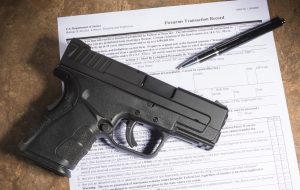 A particularly important provision allows DOJ to examine the conduct underlying an offense rather than relying only on the statutory label attached to the conviction. Section 107.10(b) allows the Attorney General to consider the underlying facts in determining whether conduct falls within a presumptive category.
That matters because criminal statutes often encompass a wide range of behavior. Two people convicted under the same statute may have very different underlying facts. Conversely, a conviction carrying a relatively neutral title may involve conduct that places the applicant within one of DOJ’s more restrictive categories.
For that reason, a serious eligibility analysis should begin with the charging instrument, plea agreement, factual basis, presentence materials, judgment, and other records describing what actually occurred.
An Old Conviction Does Not Automatically Mean You Need a § 925(c) Application
Before deciding how to seek federal restoration, there is a threshold question: does the person remain federally prohibited at all?
For felony-based prohibitions, 18 U.S.C. § 921(a)(20) provides that certain convictions that have been expunged or set aside, or for which a person has been pardoned or had civil rights restored, are not treated as qualifying convictions for purposes of federal firearms law. There is an important exception where the pardon, expungement, or restoration itself provides that the person may not ship, transport, possess, or receive firearms.
The interaction between state restoration law and federal law can therefore be complicated. A state order called an “expungement” or “restoration” does not answer the federal question by its label alone. The conviction, the rights actually restored, and any firearm restrictions that remain under state law must be examined together.
Michigan residents face this same dual-law problem. Our discussion of restoring firearm rights after a Michigan felony conviction explains the state-law side of that analysis. A person should not assume either that Michigan restoration automatically cures the federal disability or that an old Michigan conviction necessarily remains a federal predicate forever.
What Information Can DOJ Consider?
The new process is not limited to reviewing the disabling conviction. Under § 107.20, DOJ may examine the applicant’s entire criminal history, including arrests that did not result in charges, charges that did not result in convictions, deferred dispositions, and other alternative resolutions.
The Attorney General may also consider conduct underlying charges dismissed in exchange for a guilty plea, conduct while the applicant was serving a sentence, compliance with supervision, satisfaction of financial obligations, the amount of time since sentence completion, controlled-substance history, restraining or protection orders, threats or threatening behavior, and other relevant information.
That breadth of review is one of the most consequential aspects of the program. A person with one decades-old disabling conviction may nevertheless have later events that DOJ considers relevant even though those events did not result in a conviction.
The Application Requires Much More Than a Statement of Rehabilitation
The final rule requires substantial documentation. For a felony-based application, the required materials can include the charging document, plea agreement, factual basis, presentence report or similar sentencing material, judgment of conviction, and documentation establishing completion of the sentence and supervision.
Applicants must also authorize DOJ to obtain and examine background information, including employment, medical, military, and criminal records. Individual applicants must provide electronic fingerprints or qualifying fingerprint cards.
The breadth of those requirements reflects the question DOJ is trying to answer. The agency is not merely asking whether enough time has passed. It is evaluating the circumstances of the disability, the applicant’s subsequent record, reputation, present stability, and potential danger if firearm rights are restored.
Why the Three Character References Matter
DOJ currently requires three character references. According to the Department’s implementation guidance, the references cannot be related to the applicant by blood or marriage, must generally have known the applicant for at least three years, and cannot themselves be federally prohibited from possessing firearms.
The references are not simply asked whether they believe the applicant is a good person. They must make specific representations under penalty of perjury concerning matters such as criminal conduct, unlawful controlled-substance use, alcohol or intoxicant abuse, mental health affecting judgment or behavior, community reputation, threats or attempted violence, suicide threats or attempts, and whether the applicant would pose a danger if permitted to possess a firearm.
This makes selection and preparation of references materially different from collecting ordinary letters of support. A reference must be able to truthfully address the federal questions DOJ has chosen to make part of its public-safety review.
Why Rehabilitation Evidence Still Matters
The presence of presumptive categories should not obscure the individualized nature of the statutory standard. Section 925(c) directs attention to the circumstances surrounding the disability and the applicant’s record and reputation. Part 107 similarly requires DOJ to examine post-conviction conduct and other evidence bearing on dangerousness and the public interest.
A strong application will therefore often require a coherent evidentiary record showing what has changed since the disabling event. Depending on the case, that may include long-term law-abiding conduct, stable employment, family and community responsibilities, successful completion of treatment where relevant, compliance with court obligations, and credible third-party evidence of character and stability.
The purpose is not to assemble favorable adjectives. It is to provide reliable evidence that addresses the criteria the Attorney General is legally required to evaluate.
Can DOJ Deny Relief Even After the 5- or 10-Year Period Expires?
Yes. Expiration of a time-based presumption does not create an entitlement to restoration. It simply removes that particular presumptive obstacle.
The underlying statutory standard remains. The applicant must still satisfy the Attorney General that the circumstances of the disability, record, and reputation show that the person is not likely to act dangerously and that granting relief would not be contrary to the public interest.
Likewise, DOJ remains permitted to examine the underlying conduct and other relevant information even when a time-based presumption no longer applies.
What Happens if DOJ Denies the Application?
A denial can have consequences beyond the immediate application. Under § 107.70, certain prior denials themselves create presumptions affecting later applications. A person should therefore not assume that an unsuccessful application can simply be repeated without consequence.
This is another reason pre-filing analysis matters. The goal should be to determine the legal and evidentiary posture before creating an administrative record that may influence later proceedings.
Can a Federal Firearm Rights Restoration Denial Be Appealed?
Section 925(c) provides an important form of judicial review. A person whose application is denied by the Attorney General may petition the United States District Court for the district in which the person resides for review of the denial. The statute also permits the court, in its discretion, to admit additional evidence where failure to do so would result in a miscarriage of justice.
The final rule deliberately does not create another internal administrative appeal. DOJ explained that Congress already supplied a judicial remedy through § 925(c).
That makes the quality of the original administrative record especially important. A restoration application is not simply paperwork submitted to an agency. It can become the foundation of later federal litigation.
When Will Federal Firearm Rights Restoration Applications Open?
Current implementation status as of August 25, 2026:
- The final rule is effective September 21, 2026.
- DOJ states that invited applicants may begin applying September 25, 2026.
- DOJ plans to open applications to the public on November 4, 2026, initially for the first 5,000 applicants.
- DOJ states that another 500 public applicants may apply beginning January 4, 2027.
- DOJ currently lists a $30 non-refundable application fee and states that collection of the fee will begin with the January 4, 2027 stage.
- The online application is not yet available and is currently listed by DOJ as “coming soon.”
These rollout details are administrative and can change. Anyone preparing to apply should verify the current procedures directly through the Department of Justice Federal Firearm Rights Restoration Program before submitting materials.
Federal Restoration Does Not Automatically Restore State Firearm Rights
Federal and state firearm restrictions must be considered separately. DOJ expressly warns that the federal restoration process does not automatically restore state or tribal firearm rights.
The reverse problem also exists. A person may obtain relief under state law and nevertheless need a separate federal analysis. Michigan residents considering restoration should therefore examine both Michigan firearm law and the federal prohibition before possessing or acquiring a firearm.
Barone Defense Firm’s broader firearm rights restoration resource addresses the need to evaluate the interaction between the two systems.
Why This Is More Than a Federal Form-Filling Process
The new program creates an administrative application, but the legal work begins before the form is completed. The first task is identifying the exact federal disability and determining whether it still exists. The next is determining which presumptions apply, what underlying conduct DOJ may consider, and whether another legal mechanism may already affect the federal predicate.
Then comes the evidentiary analysis. Old charging records, plea documents, sentencing materials, supervision history, subsequent arrests, protection orders, treatment history, substance-use issues, reference qualifications, and evidence of rehabilitation can all matter. Some favorable cases may be straightforward. Others may reveal issues that should be resolved or investigated before an application is filed.
That is especially important because a denial can affect later applications and because § 925(c) permits judicial review in federal court. The administrative filing should therefore be approached as a legal proceeding with a potentially lasting record, not simply as an online application.
What the New DOJ Rule Means Going Forward
The August 20 rule does not guarantee restoration to anyone. Nor does it convert every old conviction into a viable application. What it does is restore something that has been missing from federal firearms law for more than three decades: a functioning process through which an individual can ask the federal government to make an individualized determination under § 925(c).
For some people with long-past convictions and substantial evidence of rehabilitation, that may create a meaningful new opportunity. For others, the presumptions in Part 107 will make relief difficult, and some applicants may discover that a different state or federal legal mechanism must be considered first.
The important development is therefore not simply that applications are returning. It is that federal firearm disability law now includes an operational administrative pathway that must be analyzed together with the conviction, the applicant’s subsequent history, state restoration law, and the federal rules defining whether the disability continues to exist.
Frequently Asked Questions About the New Federal Restoration Process
Is federal firearm rights restoration available only to nonviolent felons?
No. DOJ states that people prohibited under the various categories of 18 U.S.C. § 922(g) may apply. However, the new rule creates strong presumptions against relief for specified offenses, conduct, and current statuses.
Does waiting five or ten years guarantee federal restoration?
No. The five- and ten-year provisions are presumptions governing DOJ’s review. Even after a time-based presumption no longer applies, the applicant must still satisfy the statutory public-safety and public-interest standards.
Does an expungement automatically mean federal restoration is unnecessary?
No. Section 921(a)(20) can cause some expunged, set-aside, pardoned, or civil-rights-restored convictions not to count as federal predicates, but the precise state law and any continuing firearm restrictions must be examined.
Can DOJ consider an arrest that never resulted in a conviction?
Yes. Part 107 expressly permits consideration of arrests, charges, certain dismissed conduct, restraining orders, threats, and other relevant information, even where there was no resulting conviction.
Can a DOJ denial be reviewed by a court?
Yes. Section 925(c) permits a denied applicant to petition the United States District Court in the district where the applicant resides for judicial review.
Review Your Federal and Michigan Firearm Rights Before Filing
Determining whether a person should seek relief under § 925(c) requires more than identifying an old conviction. The federal prohibition, the underlying conduct, state-law restoration, § 921(a)(20), DOJ’s presumptions, and the applicant’s later history can all affect the correct strategy.
Barone Defense Firm represents people in Michigan in firearm and criminal matters and can evaluate how state and federal firearm restrictions interact, whether a federal disability remains, and what restoration options may be available.
About the Author
Patrick T. Barone is the founding partner of Barone Defense Firm in Birmingham, Michigan. He has practiced criminal defense for more than three decades and leads a firm whose practice includes gun crimes, firearm rights restoration, DUI defense, sex crimes, and other serious criminal matters. Barone is the author of five books and more than 130 legal publications and has been recognized in Best Lawyers in America and Michigan Super Lawyers.
Sources and Authorities
- Department of Justice, Application for Relief From Disabilities Imposed by Federal Laws With Respect to the Acquisition, Receipt, Transfer, Shipment, Transportation, or Possession of Firearms, 91 Fed. Reg. 54054 (Aug. 20, 2026).
- 18 U.S.C. § 925(c).
- 18 U.S.C. § 921(a)(20).
- U.S. Department of Justice, Federal Firearm Rights Restoration Program.
- United States v. Bean, 537 U.S. 71 (2002).