Search
 Michigan Criminal Defense Lawyer Blog
I Was Arrested for Drunk Driving, Should I go to AA?


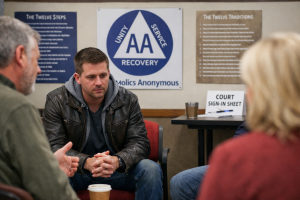
If you were recently arrested for drunk driving in Michigan, one of the first questions your attorney may raise is whether you should begin attending a recovery support program such as Alcoholics Anonymous before your case is resolved.
The short answer is yes, in most cases, voluntary enrollment in a structured recovery program is one of the most effective steps you can take to demonstrate personal responsibility to the court.
Recovery program participation strengthens both the character letters your support network can write on your behalf and the broader sentencing mitigation strategy your attorney will build to position your case favorably during plea negotiations and at sentencing.
But AA is not the only option, and it may not be the right one for everyone. This guide explains the programs that Michigan courts recognize, what each offers, how they compare, and how to choose the one that makes the most sense for your situation.
What Is a Twelve-Step Program?
A twelve-step program is a structured support framework designed to help individuals address addiction, cultivate personal accountability, and maintain long-term sobriety. The original model, developed by Alcoholics Anonymous in the 1930s, asks participants to acknowledge powerlessness over a substance, seek guidance beyond themselves, make amends for past harms, and support others in recovery.
Most programs that have followed have preserved that structure while adapting its philosophy to different beliefs, populations, and recovery goals. Not all of the programs described below are technically twelve-step programs in the traditional sense, but all are structured recovery support groups that Michigan courts and licensing authorities recognize as meaningful evidence of a person’s commitment to sobriety.
A word on timing: at the Barone Defense Firm, we recommend that clients consider beginning a recovery program as early as possible after an arrest, not because we assume every client has an alcohol problem, but because proactive engagement consistently produces better outcomes in court. The results of a substance use evaluation will inform what level of programming is appropriate, and your attorney should guide that process.
Recovery Programs Available in Michigan
Alcoholics Anonymous
Alcoholics Anonymous remains the most widely recognized and most broadly available recovery support program in the United States and in Michigan. Founded in 1935, AA is a global fellowship open to anyone who wants to address a drinking problem. There are no fees, no membership requirements, and no educational prerequisites. Members follow the Twelve Steps for personal recovery and the Twelve Traditions for group unity, and the program’s foundational text, known as the “Big Book,” outlines the recovery process and includes personal accounts of sobriety.
AA is spiritually oriented and asks members to acknowledge a “higher power,” which participants are free to define in whatever way reflects their own beliefs. Meetings are widely available across Michigan, offered in multiple formats, speaker meetings, open discussion groups, step-study sessions, and in virtually every county. Daily attendance for the first ninety days is common in Michigan sobriety court programs, which frequently require AA participation as a condition of enrollment.
From a purely legal standpoint, AA is the program Michigan judges, prosecutors, and Secretary of State hearing officers are most familiar with, and consistent, documented attendance carries significant weight in plea negotiations, at sentencing, and in driver’s license restoration proceedings. That familiarity is a genuine legal advantage and should be weighed as one factor in choosing a program.
Celebrate Recovery
Celebrate Recovery is a Christ-centered program founded in 1991 at Saddleback Church in California. It addresses not only substance use but also what the program calls “hurts, habits, and hang-ups” more broadly, applying biblical principles alongside an eight-principle framework that parallels the twelve steps. The program is structured and curriculum-based, with weekly group sessions, accountability partners, and sponsor relationships.
Celebrate Recovery has a substantial presence in Michigan, particularly in communities with active church networks. For clients whose faith is central to their lives, it may offer a more personally resonant environment than AA. Michigan courts generally accept Celebrate Recovery documentation in lieu of AA attendance, though clients should confirm this with their attorney for their specific jurisdiction.
SMART Recovery
SMART Recovery — Self-Management and Recovery Training, is a secular, evidence-based alternative to twelve-step programs that has grown substantially in both credibility and availability since its founding in 1994. It is entirely distinct from Rational Recovery (discussed below) and should not be confused with it. SMART operates more than 2,500 regular meetings in over thirty countries and offers both in-person and online meetings.
The SMART framework is built around a four-point program: building and maintaining motivation; coping with urges and cravings; managing thoughts, feelings, and behaviors; and living a balanced life. It draws primarily on cognitive behavioral therapy and rational emotive behavior therapy, and it does not require acknowledgment of a higher power or acceptance of the disease model of addiction. Meetings are led by trained volunteer facilitators rather than sponsors.
As of 2025, SMART Recovery USA formally embraced a harm reduction philosophy, meaning that participants with goals short of complete abstinence are explicitly welcomed in its handbook and facilitator training. This shift makes SMART a more accessible entry point for clients who are not yet fully committed to permanent sobriety, while still providing a court-recognized, documented support framework.
SMART Recovery is increasingly accepted by Michigan courts, sobriety court programs, and Secretary of State license restoration hearing officers as a legitimate substitute for AA. Several Michigan drug court programs explicitly list SMART Recovery alongside AA as an approved support option. Clients should verify acceptance with their attorney and, where possible, with the specific court or hearing officer involved in their case.
A 2018 longitudinal study found that among participants with abstinence as their stated goal, SMART Recovery produced outcomes statistically comparable to AA. That research foundation, combined with the program’s broad availability and secular orientation, makes it the strongest AA alternative for clients who are not spiritually inclined.
Rational Recovery
Rational Recovery was founded in 1986 by Jack Trimpey and is based on a self-directed cognitive approach called the Addictive Voice Recognition Technique. Unlike the programs described in this guide, Rational Recovery does not operate group meetings – Trimpey deliberately discontinued the group meeting model in favor of a purely self-directed methodology.
Because it involves no group attendance, it produces no meeting logs or attendance records, and Michigan courts do not recognize it as a structured support program for purposes of sentencing mitigation or license restoration. Clients interested in a secular, cognitive approach should consider SMART Recovery, which operates a robust meeting network and is court-recognized.
Refuge Recovery
Refuge Recovery is a non-theistic program founded by Noah Levine that draws on Buddhist philosophy, particularly the Four Noble Truths and the Eightfold Path, to address the root causes of addiction. The program emphasizes daily meditation, ethical living, written reflection, and community support. Meetings include guided meditation, peer discussion, and a focus on compassion and present-moment awareness.
Refuge Recovery is available in a number of Michigan communities and maintains an online meeting option. For clients whose values align with mindfulness-based or Buddhist-influenced approaches, it offers a thoughtful and structured alternative. As with other non-AA programs, clients should confirm court acceptance in advance.
LifeRing Secular Recovery
LifeRing Secular Recovery is a peer-run, abstinence-focused network founded in California in 1999 that has grown considerably in the years since. LifeRing operates on what it calls its “Three S” philosophy: Sobriety (complete abstinence from alcohol and unprescribed drugs), Secularity (no prayer or religious content in meetings), and Self-Empowerment (the individual takes primary responsibility for recovery decisions). Meetings use a conversational, crosstalk format in which participants share practical strategies and experiences rather than following a scripted curriculum. There are no sponsors and no steps.
LifeRing supports approximately 2,500 unique online meeting participants each week and has a presence in several Michigan communities. Research from the National Institute on Alcohol Abuse and Alcoholism’s PAL Study, published in 2025, found no significant difference in alcohol outcomes between LifeRing, SMART Recovery, Women for Sobriety, and twelve-step groups when controlling for abstinence goals. LifeRing is cited alongside AA and SMART Recovery in Michigan license restoration proceedings as an accepted alternative. Clients should confirm acceptance in their specific court.
Women for Sobriety
Women for Sobriety is the oldest women-specific recovery program in the country, founded in 1975. It is grounded in thirteen acceptance statements centered on emotional and spiritual growth, self-worth, and overcoming shame, themes the program’s founder identified as particularly relevant to women’s recovery experiences. Meetings are restricted to women and are available in both in-person and online formats.
For female clients facing an OWI charge in Michigan, Women for Sobriety offers an environment specifically calibrated to the challenges women tend to encounter in recovery. Peer-reviewed research comparing Women for Sobriety to AA shows comparable effectiveness on measures of abstinence and drinking reduction after controlling for demographic factors. Courts and licensing authorities increasingly recognize Women for Sobriety documentation, though clients should confirm acceptance in their jurisdiction.
Secular Organizations for Sobriety
Secular Organizations for Sobriety (SOS) is an abstinence-based secular network founded in 1985 that does not follow a step-based structure. Its meeting framework emphasizes personal responsibility for sobriety decisions and does not incorporate sponsor relationships or spiritual elements. SOS has a more limited meeting presence in Michigan than SMART Recovery or LifeRing, but online meetings are available. It is worth considering for clients with strong secular preferences who do not connect with SMART Recovery’s cognitive-behavioral orientation.
Caduceus Meetings — A Special Note for Healthcare Professionals
Healthcare professionals facing a Michigan OWI charge, physicians, nurses, pharmacists, dentists, and others, should discuss Caduceus meetings with their attorney as a primary or supplemental recovery option. Caduceus groups follow the same twelve-step format as AA but are held in a confidential, peer-only environment specifically designed for licensed healthcare providers. Meeting locations are kept confidential to protect members’ professional reputations, with contact information shared discreetly through Michigan health professional programs, physician health programs, and state licensing boards.
Voluntary attendance at Caduceus meetings before any licensing board action may influence disciplinary outcomes favorably, and it demonstrates to Michigan courts the kind of professional accountability that judges find particularly meaningful. Groups meet in communities including Birmingham, Bloomfield Hills, Ann Arbor, Grand Rapids, and the greater Detroit metropolitan area.
Because professional license consequences in healthcare OWI cases can be severe, including LARA reporting obligations and board proceedings entirely separate from the criminal case — the recovery program decision should be made as part of a coordinated legal and professional strategy. Physicians facing this situation should review our dedicated guide to Michigan OWI charges for doctors.
Healthcare professionals charged with OWI with a minor passenger face an especially elevated level of career risk; that charge carries mandatory implications under Michigan licensing law that require immediate attention — see our full discussion of how an OWI with a minor passenger can end a healthcare career in Michigan. For other licensed professionals, teachers, pilots, attorneys, and others, our overview of professional license consequences following a DUI conviction addresses the reporting obligations and licensing risks specific to each field.
How Michigan Courts View These Programs
AA remains the default expectation in most Michigan courts. Sobriety court programs, which are available to repeat OWI offenders as an alternative to standard sentencing, typically require daily AA meeting attendance for the first ninety days of enrollment, with requirements tapering through subsequent program phases. That said, SMART Recovery and LifeRing are increasingly named as approved alternatives in Michigan’s problem-solving court framework, and several counties explicitly accept them.
In driver’s license restoration proceedings before the Secretary of State, the hearing officer expects evidence of participation in a structured support group, but AA attendance is not mandatory. The Barone Defense Firm has successfully restored driving privileges for clients who did not attend AA, though doing so requires more careful documentation and preparation. Clients who choose a non-AA program should maintain consistent attendance records, obtain a sponsor or facilitator contact who can provide verification, and discuss documentation strategy with their attorney well in advance of any hearing.
Recovery program attendance is among the most important foundations for the character letters that support network members submit on a client’s behalf, and it is a central element of the sentencing mitigation narrative your attorney will present to the court. The DUI treatment pathway and the support program decision are related but distinct: a support group is not a substitute for clinical treatment when treatment has been recommended following a substance use evaluation. Clients who have received a moderate-to-severe alcohol use disorder diagnosis should be engaged in clinical treatment and a support group simultaneously.
Online Meetings
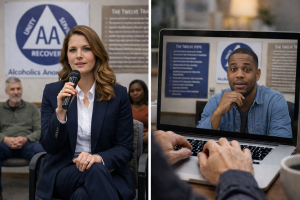 All of the major recovery programs described in this guide now offer robust online meeting options, a development accelerated during the COVID-19 pandemic and now a permanent feature of the recovery landscape. For clients in rural Michigan counties, clients whose work schedules conflict with local meeting times, or clients who need to begin documenting attendance immediately following an arrest, online meetings offer a practical and fully legitimate alternative to in-person attendance.
Michigan courts and licensing authorities generally accept online meeting attendance provided it is properly documented. Clients should obtain a sign-in record, a facilitator’s name, and a meeting identification number or link for each session attended, as documentation standards are the same regardless of meeting format. Each program maintains an online meeting finder: Alcoholics Anonymous, SMART Recovery, LifeRing Secular Recovery, Women for Sobriety, Celebrate Recovery, Refuge Recovery, and Secular Organizations for Sobriety.
Choosing the Right Program
Selecting a recovery program is a personal decision, but for clients navigating a Michigan OWI case it is also a legal and strategic one. The following considerations should guide the choice.
Court recognition in your jurisdiction. AA carries the broadest acceptance across all Michigan courts, sobriety court programs, and Secretary of State hearings. If you are uncertain which programs your specific judge or hearing officer accepts, confirm with your attorney before committing to a program.
Alignment with your beliefs and values. A program that resonates with your personal philosophy, whether spiritual, secular, faith-based, or mindfulness-oriented, is far more likely to produce consistent attendance and genuine engagement. Judges and hearing officers are perceptive; perfunctory attendance with no evident engagement does not carry the same weight as documented, active participation in a program that has clearly affected your life.
Availability. Consider whether meetings are conveniently available in your area or online at times that work for your schedule. Attendance consistency matters more than program prestige.
Clinical recommendations. If your substance use evaluation has produced specific treatment recommendations, the appropriate support program is one that complements, and does not substitute for, recommended clinical care.
The Barone Defense Firm recommends attending at least two or three meetings of each program under serious consideration before committing to one. Your attorney and your treatment provider, working together, can help you identify the most appropriate choice for your situation.
Finding and Attending Meetings
Online resources. Each program’s official website maintains a meeting locator. Local community organizations, hospitals, and outpatient treatment providers also maintain referral lists.
First attendance. Most programs distinguish between open meetings, which welcome anyone, and closed meetings, restricted to those personally affected by the relevant issue. If you are uncertain, contact the meeting organizer in advance to ask which format applies.
Documentation from the start. Begin maintaining a record of attendance at your first meeting, regardless of program. Record the date, time, location or meeting name, and the name of the meeting’s facilitator or chairperson. The Barone Defense Firm provides a meeting attendance sign-in sheet suitable for AA, Celebrate Recovery, SMART Recovery, and other twelve-step and recovery support programs; print several copies and bring one to each meeting for your facilitator or a fellow member to sign. A sponsor or facilitator who can later provide a letter verifying your attendance and engagement is an asset in any court proceeding, and a consistently maintained sign-in log is among the most persuasive documents you can bring to a sentencing hearing or license restoration proceeding.
Consistent attendance. Courts view a pattern of sustained, voluntary attendance as more meaningful than a burst of attendance in the weeks before a hearing date. Beginning early and maintaining regularity tells a more credible story.
Frequently Asked Questions
Does going to AA help with a Michigan DUI case? Yes. Voluntary, documented attendance at AA or another recognized recovery program demonstrates personal responsibility and a commitment to addressing the underlying issue. Michigan courts consistently view proactive engagement in recovery programs favorably during plea negotiations and at sentencing, and participation is one of the most reliable tools for improving a case outcome.
Do Michigan courts require AA specifically? Not always. AA is the most universally recognized program and is required in most Michigan sobriety court programs, particularly in the first ninety days. However, SMART Recovery, LifeRing, Celebrate Recovery, Refuge Recovery, and Women for Sobriety are accepted in many Michigan courts and in all Secretary of State license restoration proceedings. Your attorney should confirm what your specific judge or hearing officer accepts.
Can I use SMART Recovery instead of AA in Michigan? In many courts, yes. SMART Recovery is explicitly named alongside AA as an approved support program in numerous Michigan problem-solving court frameworks and is accepted by Secretary of State hearing officers in license restoration cases. Confirm acceptance in your specific jurisdiction with your attorney before making a program selection.
Do online meetings count? Yes. Online meetings are accepted by Michigan courts and the Secretary of State provided they are properly documented. Maintain records of the date, meeting name, and facilitator for each session attended.
What if I’m not an alcoholic — should I still attend meetings? Attending a recovery support program does not constitute an admission of alcoholism, and courts do not treat it as one. Voluntary enrollment before any formal diagnosis or court order demonstrates character and initiative, which consistently benefits case outcomes. Discuss the appropriate program and level of engagement with your attorney.
What if I’m a healthcare professional? Healthcare professionals should consider Caduceus meetings as a first option and discuss the professional licensing implications of their choice with an attorney experienced in both OWI defense and professional license matters. The program selection has implications not only for the criminal case but for LARA oversight proceedings and monitoring requirements. See our full guide to Caduceus meetings and healthcare OWI cases.
Working With the Barone Defense Firm
At the Barone Defense Firm, we treat every Michigan OWI case as a complete picture of a person’s life, not merely a charge to be processed. Our approach integrates legal strategy with proactive rehabilitation planning, because experience has taught us that clients who engage meaningfully with treatment and support programs consistently achieve better outcomes than those who do not.
Our sentencing mitigation work goes beyond simply assembling documentation of program attendance. We draw on psychodrama-informed techniques to help courts understand who a client is as a person, the experiences, relationships, and circumstances that provide essential context for a just sentence. Attorneys Patrick Barone and Doug Passon have written and presented extensively on this approach; an overview of how psychodrama informs sentence mitigation is available for those who want to understand the methodology in depth.
We work closely with trusted substance use professionals across Michigan to ensure our clients receive evaluations and recommendations tailored to their specific circumstances. If you have been arrested for drunk driving in Michigan, we encourage you to contact our office for a free consultation. We will review the facts of your case, help you understand your options, and guide you through every step of the process, from your first meeting with a substance use evaluator through sentencing or beyond.
To schedule a confidential consultation, call (248) 306-9158 or 1-877-ALL-MICH (877-255-6424), or contact us online. Consultations are available around the clock.