Search
 Michigan Criminal Defense Lawyer Blog
Can Deleted Child Pornography Evidence Be Recovered in Michigan?


Deleted CSAM evidence in Michigan is rarely gone for good. Forensic analysts recover files through hash values stored in a device’s cache, even when images have been deleted by the user. A hash match against the NCMEC database can support charges without recovering the complete image file.
Deleted CSAM files are rarely eliminated from a device’s storage simply by hitting delete. One place deleted images frequently remain is in the device’s cache or temporary memory, where forensic analysts can identify and recover them even when the user believes the material is gone.
When a forensic analyst identifies a CSAM file on a device, what they have established is that a file matching a known hash value was present. A hash value is a unique numerical fingerprint assigned to a specific digital file. The National Center for Missing and Exploited Children maintains a database of hash values for known CSAM images, and a match against that database can support charges even when the original image has been deleted, was never fully opened, or exists only as a fragment in the device’s cache memory.
What a hash match does not establish is equally important. It does not identify who placed the file on the device. It does not confirm when the file arrived or how. It does not establish that the person in possession of the device ever opened, viewed, or was aware of the file’s existence. Under MCL 750.145c and under 18 U.S.C. § 2252, knowing possession is an element the prosecution must prove. Presence of a file on a device is evidence of possession. It is not, by itself, evidence of knowing possession.
This distinction matters most in cases involving file-sharing platforms. These platforms frequently bundle multiple files into a single download package. A person downloading what appears to be a legitimate file may receive dozens of additional files whose contents are not visible or apparent at the point of download. CSAM files acquired this way may never have been opened and may exist only in a folder the user never accessed. The technical evidence in such cases can look identical to deliberate acquisition. Whether it is or not is a question forensic examination is designed to answer.
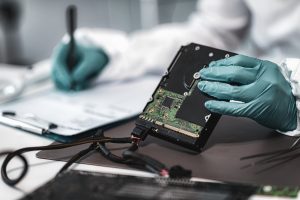 Deleted CSAM evidence compounds the complexity for both sides. A deleted file may no longer be accessible to the user but may remain recoverable through forensic tools. Cache memory, temporary files, and application data can preserve file fragments and metadata long after the user believes the material is gone. The forensic record of a device tells a more complete story than the device’s current visible contents, and that story can support the defense as readily as it can support the prosecution.
When a client tells the Barone Defense Firm that CSAM material arrived on their device through a bundled download or without their knowledge, that claim cannot be accepted or rejected at face value.
What it can be is tested. The technical question of whether the circumstances of a file’s acquisition are consistent with inadvertent receipt, or inconsistent with it, is precisely what an independent forensic examination is designed to determine.
Retaining an independent forensic expert is not a step reserved for cases that go to trial. It is standard practice at the Barone Defense Firm from the earliest stage of representation, because the forensic record is almost always the most important evidence in a CSAM case and its interpretation should never be left solely to the government’s analyst.
What is a cache?
A cache is an area of a computer’s memory that temporarily stores information about files viewed on a device. The purpose of cache is to allow webpages to load more quickly, and therefore, nearly all electronic devices- computers, phones, and tablets- have a cache.
A cache can exist both in the device itself and within apps on the device. For example, if you’re browsing the internet on your iPhone on the Safari app, both the iPhone and Safari could store data about what you’re viewing. Further, Safari (and other browsers like it) will typically store copies of any images viewed on the pages you visit.
The main purpose of a cache is to allow the computer, app, or software to quickly and easily access files so that the device, app, or software can run faster.
What Is a Hash Value and How Is It Used in a Michigan CSAM Case?
Hash value is a unique set of numbers that is designated to a specific file and stored in a cache. Another way to put it is that a file’s hash value is its fingerprint (again, unique). In a child porn case, a forensics expert can identify images by finding its hash value in the cache.
How Is Deleted CSAM Evidence Identified Through Cache and Hash Values?
If law enforcement searches a computer and only finds hash values in a cache, no pictures, it can still identify those files as child pornography by checking the hash values against the National Center for Missing and Exploited Children database. NCMEC maintains a database that includes millions of images of exploited children. The database includes the hash values for those images. Law enforcement can take the hash values found in the cache of a device of someone suspected of possessing, distributing, or producing child pornography. If they find a match, it will be used in prosecuting that person.
What if you accidentally downloaded images that are child porn?
Some people inadvertently get child porn and child sexually abusive material by accident. Child porn is frequently saved with generic file names (e.g. sunshine.jpeg). If you use torrent sites and other file sharing websites, it’s possible that you search for a completely innocent term like “Madonna” and download a folder of files related to that word. There have been cases in which many legal files are in the same download as only a few child porn images because of generic terms like “Madonna.”
In a situation like this, a forensics expert can look at the cache and the data logs and tell whether pictures stored on the cache were ever opened. If they were never opened and the ratio of legal files greatly outnumbers the child porn images, there may be a good case for an accidental download defense.
Frequently Asked Questions: Digital Evidence in Michigan CSAM Cases
What Should I Do If Deleted CSAM Evidence Is Found on My Device?
Do not delete files, destroy the device, or attempt to alter the device’s contents in any way. Doing so after you know or reasonably suspect an investigation is underway carries its own serious legal consequences. Retain a defense attorney immediately and request an independent forensic examination.
A qualified forensic examiner can assess how files arrived on the device, whether they were ever accessed, and whether the circumstances are consistent with inadvertent receipt. That examination should happen before any other strategic decision is made.
What is an accidental download defense in a Michigan child pornography case?
An accidental download defense applies when CSAM was acquired unintentionally, typically through file-sharing platforms that bundle illegal files with legal content under generic file names. A forensic expert can examine cache logs to determine whether files were ever opened and to assess the ratio of legal to illegal content in a download. If the images were never viewed and the circumstances support inadvertent acquisition, this may be a viable defense.
Can I be charged with CSAM possession in Michigan if I never saved the images?
Yes. Under MCL 750.145c, a person can be charged for intentionally seeking out CSAM to view it even without saving or downloading the material. Evidence of search terms, browsing history, and cache data can support a possession charge even where no complete image file is recovered from the device.
How long does digital forensic analysis take in a Michigan child pornography investigation?
The timeline varies depending on the volume of data, the number of devices seized, and law enforcement’s caseload. Analysis of a single device can take weeks to months. During this period it is important to have defense counsel engaged so that an independent forensic review can be conducted and any evidence preservation obligations are addressed.
Contact a Michigan CSAM Defense Attorney
If you are under investigation for or have been charged with a CSAM offense involving digital evidence in Michigan, the forensic record of your devices is being built right now. The time to retain independent counsel and begin an independent forensic review is before that record is finalized and before the prosecution’s interpretation of it goes unchallenged.
The Barone Defense Firm offers free consultations and our phones are answered 24 hours a day, seven days a week. Call 1-877-ALL-MICH (877-255-6424) today. For a full overview of Michigan child pornography charges, penalties, and defense strategies, see our Michigan child pornography laws and penalties page.
About the Author: Patrick Barone
Patrick Barone is the founding attorney of the Barone Defense Firm in Birmingham, Michigan. A graduate of the Gerry Spence Trial Lawyers College, Mr. Barone holds board certification as a Trainer, Educator, and Practitioner (TEP) in psychodrama, sociometry, and group psychotherapy through the American Board of Examiners — the highest certification level available and the only such credential held by an attorney in Michigan.
Mr. Barone has represented clients in Michigan CSAM cases involving digital forensic evidence at both the state and federal level, including cases in which independent forensic examination produced evidence material to the defense. The Barone Defense Firm works with qualified digital forensic experts, including those holding GIAC Certified Forensic Examiner credentials, as a standard component of CSAM case preparation. All litigating attorneys at the firm are admitted to practice in both the Eastern and Western Districts of Michigan. Mr. Barone has been recognized as a Michigan Super Lawyer continuously since 2007 and is listed in Best Lawyers in America.