Search
 Michigan Criminal Defense Lawyer Blog
How a Michigan OWI or DUI Can Affect a Pilot’s Ability to Fly


A Michigan OWI or DUI can create serious consequences in a pilot DUI case even before there is a conviction, because the FAA treats some alcohol-related license suspensions, revocations, and later convictions as separate reportable events. For many pilots, the real danger is not only the criminal case, but the combination of FAA reporting duties, medical-application disclosure duties, and the risk that a recent or more serious alcohol-related event will delay or complicate medical clearance.
Why a Pilot DUI Can Threaten More Than a Driver’s License
 Many pilots assume the only question is whether they will be convicted in Michigan court. That is too narrow. The FAA separates pilot certificate issues from medical certification issues, and a single incident can create problems in both systems.
A pilot can therefore face one set of consequences under 14 C.F.R. § 61.15 and a separate set of consequences when completing the next FAA medical application. In practical terms, that means the ability to keep flying may depend as much on federal reporting and medical clearance as on what happens in the criminal case itself.
What Does the FAA Require a Pilot to Report Within 60 Days
Under 14 C.F.R. § 61.15, the FAA requires certificate holders to report each alcohol- or drug-related motor vehicle action within 60 days. A reportable motor vehicle action includes a qualifying conviction, the suspension or revocation of a driver’s license for an alcohol- or drug-related reason, or the denial of an application for a driver’s license for the same kind of reason.
This is important because the FAA reporting duty can arise before a conviction. If a Michigan pilot suffers an alcohol-related license suspension or revocation, the 60-day clock may begin running from that event. If a conviction later follows from the same incident, that can create a second reporting obligation.
Does a DUI Arrest Alone Have to Be Reported to the FAA
Not through the separate 60-day Part 61 reporting letter system. The FAA’s current guidance states that arrests do not have to be reported to the FAA office that handles those notifications. But an arrest is still highly significant because it must be disclosed on the next FAA medical application.
This is one of the biggest traps for pilots. A pilot may think that no conviction means no FAA problem, when the more accurate answer is that the event may still create a medical disclosure duty now and a certificate-reporting duty later if there is a qualifying administrative action or conviction. That is why a pilot DUI arrest can create federal consequences even when the criminal case has barely begun.
What Happens If a Pilot Does Not Report a Qualifying Motor Vehicle Action
Failure to report a qualifying motor vehicle action within 60 days is itself grounds for FAA action. The regulation allows denial of an application for a certificate, rating, or authorization for up to one year, and it also allows suspension or revocation of an existing certificate, rating, or authorization.
That is why reporting mistakes can become more damaging than the underlying Michigan OWI case. A pilot may have a defensible drunk-driving case, or may later obtain a reduced disposition, but still create a separate federal problem by missing the reporting deadline or misunderstanding which event triggered it.
Can One Pilot DUI Cause a Pilot to Lose the Right to Fly
Sometimes, but not automatically. A single event does not automatically revoke a pilot certificate. The better answer is that one event can trigger reporting duties, can complicate medical certification, and can become the first event in a sequence that becomes much more dangerous if another qualifying motor vehicle action occurs within three years.
The regulation states that, except where two actions arise from the same incident or factual circumstances, a motor vehicle action occurring within three years of a previous motor vehicle action is grounds for denial, suspension, or revocation. One event may therefore be survivable, but it can put the pilot in a much more precarious position going forward.
How a Michigan OWI or DUI Can Affect an FAA Medical Certificate
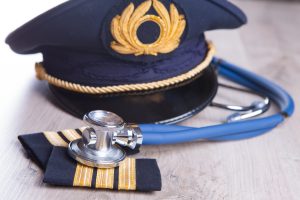 For many pilots, the medical side is the more immediate practical threat. The FAA requires disclosure on the airman medical application of arrests, convictions, and administrative actions involving alcohol or drugs. The FAA also instructs that once a pilot has answered yes to that medical-history question, the pilot must continue answering yes on later applications.
Not every single event is treated the same way. Current FAA medical guidance treats recent events, refusals, unknown BAC levels, BAC results at or above .15, multiple lifetime events, and evidence suggesting substance abuse or dependence as significantly more serious. In those situations, additional review, deferral, or documentation may be required before the pilot can continue exercising the needed privileges. In a serious pilot DUI case, the medical issue can become more important than the criminal charge itself.
How the Risk Differs for Private, Commercial, and ATP Pilots
The reporting rules are generally the same in a pilot DUI case, but the practical consequences differ sharply depending on the class of medical certificate required for the privileges being exercised. A commercial pilot or airline transport pilot often depends on first- or second-class medical privileges to work, so any delay, deferral, or denial can threaten income immediately.
A private pilot may face the same federal reporting and disclosure duties, but the operational consequences can be different. In some cases, a private pilot may still be able to fly under a different medical framework, depending on eligibility, the nature of the incident, and whether the FAA has taken any separate medical action.
Can a Private Pilot Avoid the Problem by Using BasicMed
Not automatically. BasicMed allows some pilots to fly without holding a current FAA medical certificate, but it is not a universal escape hatch. It does not erase separate certificate-reporting duties under Part 61, and it does not help every pilot in every situation.
For some non-commercial pilots, BasicMed may preserve limited flying privileges if all eligibility requirements are satisfied. But the analysis still has to be done carefully, because the DUI event may still affect future medical certification, and the pilot may still have independent reporting obligations arising from the same incident.
What About Sport-Pilot Flying Privileges
Some pilots assume that switching to sport-pilot privileges solves the problem because a current FAA medical certificate is not always required in the same way. That assumption can be dangerous. If the FAA’s records show a medical ineligibility issue, a pilot may not be able to bypass it simply by trying to rely on a driver’s license instead.
That means a DUI-related medical issue still has to be analyzed carefully. Sport-pilot rules may change what kind of medical qualification is required for a particular operation, but they do not wipe away a federal reporting problem or an unresolved FAA medical barrier.
Why Plea Strategy Matters in a Pilot DUI Case
Many people focus only on whether the case can be reduced in Michigan court. That matters, but the FAA analysis is not always controlled by the label that ends up on the plea. A pilot needs to evaluate whether the result will still qualify as a reportable motor vehicle action, what administrative license consequences have already occurred, and how the underlying facts will look when disclosed to the FAA.
This is why pilot cases require a different level of planning than an ordinary OWI case. A resolution that looks acceptable to a non-pilot may still create serious certificate, medical, employment, or airline consequences for someone whose livelihood depends on continued flying privileges.
What Most Articles About a Pilot DUI Get Wrong
Many articles reduce the issue to one sentence, report the DUI to the FAA within 60 days. That oversimplifies the problem. The real analysis requires separating at least four questions: whether there has already been a reportable motor vehicle action, whether another reportable action may later arise from the same incident, what must be disclosed on the next medical application, and what kind of medical qualification is required for the flying the pilot actually does.
The older version of this page was directionally useful but incomplete because it treated a first arrest as reportable under the separate 60-day system and used outdated suspension language. The better approach is to distinguish arrest, administrative motor-vehicle action, conviction, medical disclosure, and actual flying privilege.
How Barone Defense Firm Approaches a Pilot DUI Case
At Barone Defense Firm, we approach a pilot DUI case as more than an ordinary Michigan OWI matter. The most important objective is often not simply resolving the criminal charge, but protecting the client’s ability to preserve or regain medical clearance and keep flying lawfully.
That is why pilot cases often require a strategy that begins immediately and runs on parallel tracks. Depending on the facts, that can include working with FAA-focused counsel, obtaining a careful psychiatric or substance-use evaluation, documenting appropriate treatment or therapy, showing meaningful participation in recovery work, and building credible evidence of sustained remission when the facts support it. The goal is not to create appearances. The goal is to create an accurate and useful record that helps when the FAA evaluates medical fitness. A published DSM-5 analysis of substance use evaluations helps explain why the quality and framing of that evaluation can matter so much.
We have also found that many pilots make the same early mistakes. They assume the case cannot be defended, wait too long to hire a lawyer who understands pilot cases, or remain in denial about the role that treatment or evaluation may play in protecting medical clearance. Those mistakes can make the FAA side harder than it needs to be.
This is one reason Patrick Barone addresses pilot-license consequences in Defending Drinking Drivers. A pilot who focuses only on the Michigan charge can miss the federal problem. A pilot who focuses only on the FAA side can miss a criminal-defense opportunity that changes the long-term outcome.
If you hold a pilot certificate and have been arrested for a Michigan OWI or DUI, the first question is not only whether you will be convicted. The first question is what has already happened that the FAA may independently treat as reportable, and what needs to be protected now so that a criminal case does not become a much larger professional crisis.
About the Author
Patrick Barone is a nationally recognized Michigan OWI defense lawyer with undergraduate training in biology on a pre-medical track and manufacturer certification on the DataMaster DMT. He is the author of five books including Defending Drinking Drivers, which addresses collateral consequences in drunk-driving cases, a Michigan Super Lawyer continuously since 2007, recognized in Best Lawyers in America, and a Leading Lawyer, Advisory Board Member, Peer Selected 2026. Michigan Super Lawyer, Best Lawyers in America, Leading Lawyer.