
A first-offense OWI in Michigan is a misdemeanor under MCLA 257.625, carrying up to 93 days in jail, fines between $100 and $500, up to 360 hours of community service, and a 180-day license suspension with no driving permitted for the first 30 days. Most first-time offenders do not serve jail time, but the charge is serious and the collateral consequences extend well beyond the formal penalties.

A first-offense OWI conviction in Michigan carries formal penalties that are significant but knowable in advance. The consequences that most consistently blindside clients are the ones that do not appear in the stathe professional licensing consequences are where the damage is most acute for many clients.

A healthcare professional facing an OWI charge risks disciplinary action by their licensing board, potential conditions on their license, and in some cases suspension or revocation. A CDL holder faces a one-year federal disqualification from commercial driving on a first offense, which for a professional driver means losing their livelihood entirely.

Michigan OWI lawyer near me Patrick Barone explains what DUI BAC is and how this number affects your whole drunk driving case.

By Patrick Barone, Michigan DUI Lawyer Near Me

Michigan’s DUI legal limit is 0.08 grams percent for drivers over 21, but that number does not define the full boundaries of OWI liability in Michigan. A driver can also be charged with operating while visibly impaired at any BAC level if alcohol has materially affected their ability to drive. Michigan does not require a BAC reading at or above 0.08 to support a conviction.

But the Michigan DUI legal limit of 0.08 is widely understood as the dividing line between lawful and unlawful driving. That understanding is incomplete in two important ways. First, most people significantly overestimate how much alcohol is required to reach 0.08. For many adults, as few as two to three standard drinks consumed within an hour are sufficient. Individual variables, body weight, food intake, metabolism, and the ABV of what is being consumed, mean there is no reliable way to count your way to safety.

Posted In: and
Published on:
Updated:

Michigan criminal sexual conduct defense attorney Patrick Barone of the Barone Defense Firm explains the degrees of CSC under Michigan law and what prosecutors must prove for each charge.Criminal sexual conduct in Michigan is divided into four degrees under MCL 750.520a, ranging from unwanted sexual contact punishable by two years in prison to sexual penetration with aggravating factors carrying a potential sentence of life without parole. Every degree of CSC conviction triggers a permanent felony record and potential registration under Michigan’s Sex Offender Registration Act.
Michigan’s CSC statutes do not require physical force, violence, or even awareness that conduct was criminal. The degree of a charge turns significantly on the ages of the parties and the nature of the contact. A person who engages in sexual touching with someone they believe to be of legal age may face a fourth-degree CSC charge if the alleged victim is between 13 and 15 years old, regardless of consent and regardless of any mistaken belief about age. Michigan law does not recognize a good-faith mistake about a victim’s age as a defense in most CSC cases.

The age thresholds that determine degree are specific and consequential. Sexual penetration with a victim under 13 is first-degree CSC regardless of any other circumstance. Sexual contact — meaning touching, not penetration — with a victim under 13 is second-degree CSC. Sexual penetration with a victim between 13 and 15 is third-degree CSC. Sexual contact with a victim between 13 and 15, or with a victim between 16 and 17 in certain relationships of authority, can constitute fourth-degree CSC. The difference between a life sentence and a two-year maximum can turn entirely on the victim’s age and the nature of the physical contact.

Deleted CSAM evidence in Michigan is rarely gone for good. Forensic analysts recover files through hash values stored in a device’s cache, even when images have been deleted by the user. A hash match against the NCMEC database can support charges without recovering the complete image file.

Deleted CSAM files are rarely eliminated from a device’s storage simply by hitting delete. One place deleted images frequently remain is in the device’s cache or temporary memory, where forensic analysts can identify and recover them even when the user believes the material is gone.

When a forensic analyst identifies a CSAM file on a device, what they have established is that a file matching a known hash value was present. A hash value is a unique numerical fingerprint assigned to a specific digital file. The National Center for Missing and Exploited Children maintains a database of hash values for known CSAM images, and a match against that database can support charges even when the original image has been deleted, was never fully opened, or exists only as a fragment in the device’s cache memory.

A police search for CSAM in Michigan requires either a warrant or your consent in almost every circumstance. A warrant requires probable cause, enough evidence to persuade a neutral judge that the search is justified. That same threshold must be met before a judge will authorize criminal charges. You have the right to refuse a consent search, and exercising that right is almost always in your best interest.

Because a police search for CSAM in Michigan can proceed in three ways: with a warrant, with your consent, or in limited circumstances without either, when investigators ask for consent rather than presenting a warrant, it is because they do not yet have enough evidence to meet that standard. Consenting hands them exactly what they need. Refusing does not create probable cause where none exists. It simply declines to supply the evidence the investigation currently lacks.

Law enforcement officers are trained to obtain consent and are legally permitted to use deception to get it. Police may lawfully make false statements about the strength of their evidence, what others have told them, what they have already found, and what consequences will follow from cooperation or refusal. None of those representations are legally binding and none are required to be true.

To avoid jail on a CSAM charge in Michigan requires early legal intervention, a proactive mitigation strategy, and experienced counsel. Courts have imposed probation rather than prison in appropriate cases. The charge level, county, judge, and pre-sentencing preparation all affect the outcome significantly.

Avoiding jail on a CSAM charge in Michigan is not simply a matter of assembling positive factors and presenting them to the judge. The sentencing proceeding will almost always include material from the prosecution about harm to children, and Michigan courts take the nature of these offenses seriously. A judge who has considered that material is not a neutral audience for a standard mitigation presentation. A defense narrative that does not honestly acknowledge that children are harmed by the existence of CSAM, including children harmed by those who consumed rather than produced it, will not be credible, regardless of how strong the individual mitigation factors look on paper.

The deeper challenge in building an effective mitigation narrative is often not legal but psychological. Many clients in CSAM cases carry significant shame and have developed defense mechanisms, minimization, rationalization, emotional detachment, that prevent them from accessing the authentic personal material a judge needs to see. A sentencing memorandum written from surface-level facts, without that deeper material, reads as clinical rather than human. Reaching what actually makes a narrative compelling often requires specialized preparation techniques designed to help clients move past these defenses in a safe and structured way.

NCMEC reports CSAM to Michigan law enforcement after technology platforms detect it and generate an automated tip. Federal law requires platforms to submit those reports to the NCMEC CyberTipline, which reviews and forwards them to the appropriate investigative agency. Detection can happen without any human review of your files.

What most people do not understand about a case where NCMEC reports CSAM to Michigan law enforcement is that by the time an agent makes contact, the investigation has typically been underway for weeks or months. The platform detected the material, generated an automated report, NCMEC reviewed and forwarded it, and federal or state investigators identified the account holder, confirmed the address, and built a probable cause foundation for a warrant, all before any contact with the suspect. The person receiving that knock believes they are at the beginning of a process. In reality they are near its end.

That asymmetry produces four predictable and serious mistakes. The first is believing that cooperating with investigators will result in more lenient treatment. It rarely does, and statements made during voluntary cooperation frequently become the most damaging evidence in the case. The second is believing that deleting files or destroying the device eliminates the evidence. It does not. Hash values and metadata can persist in ways that are not visible to the user, and destruction of a device after a person knows or reasonably suspects an investigation is underway carries its own serious legal consequences. The third is believing that because no contact has occurred for weeks or months, law enforcement lost interest or moved on. Investigations of this kind do not expire. The fourth is believing that a prior conversation with investigators went well and the matter is resolved. It almost certainly is not.

In Michigan, the legal difference between sexual assault and rape is determined by penetration. While Michigan law uses the term “Criminal Sexual Conduct” (CSC) instead of “rape,” charges involving sexual penetration are typically 1st or 3rd Degree CSC. In contrast, “sexual assault” involving intentional contact without penetration is charged as 2nd or 4th Degree CSC.

The word “rape” does not itself appear within our criminal laws. Instead, rape is used as a generic term to refer to what happens when you have non-consensual sexual intercourse with another person, especially when either physical force or threats are used to get the other person to submit to the sex act.

Age is an important factor in Michigan sex crimes law. We discuss the concept of age of consent elsewhere.

ChatGPT-Image-Mar-4-2026-03_08_47-PM-1-300x200

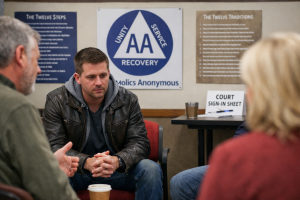
If you were recently arrested for drunk driving in Michigan, one of the first questions your attorney may raise is whether you should begin attending a recovery support program such as Alcoholics Anonymous before your case is resolved.

The short answer is yes,  in most cases, voluntary enrollment in a structured recovery program is one of the most effective steps you can take to demonstrate personal responsibility to the court.

Recovery program participation strengthens both the character letters your support network can write on your behalf and the broader sentencing mitigation strategy your attorney will build to position your case favorably during plea negotiations and at sentencing.

Michigam OWI lawyer Patrick Barone owns Barone Defense Fir m in Birmingham, MI. Here he discusses the age of consent (the legal age that a perron must be to have consensual relation with another human being.

If your Michigan defense attorney has asked you to collect character letters for your DUI/OWI case or other criminal matter, this guide explains everything your authors need to know – how to format the letter, what to include, and the specific storytelling approaches that make a character letter genuinely persuasive to prosecutors and judges. You can share a link directly to this page with everyone you ask to write on your behalf.

Over three decades of handling Michigan DUI and criminal defense cases, and as a co-author of the Michigan State Appellate Defender Office’s published guide on this subject, I have read hundreds of these letters. I know which ones move decision-makers and which ones fall flat. The difference almost never comes down to who writes the letter. It comes down to how it is written.

One preliminary point bears emphasis: there is no such thing as a form character letter, and this guide deliberately does not provide one. When every letter submitted on your behalf follows the same template, they stop being individual voices and start looking like a coordinated public relations campaign. Prosecutors and judges notice this immediately, and it undermines your credibility rather than building it. The use of form letters is strongly discouraged.