Search
 Michigan Criminal Defense Lawyer Blog
Conditions of Bond During Pretrial Release in Michigan


Bond conditions are the rules a person must follow while released from custody during a Michigan criminal case. These conditions are separate from the amount of money, if any, that must be posted for release. A person may be released on a personal bond, cash bond, 10% bond, or surety bond and still be required to follow strict pretrial release conditions.
In Michigan, bond conditions can affect work, travel, family contact, alcohol or drug testing, firearm possession, treatment, driving, and ordinary daily life. For that reason, a person facing prosecution should speak with a Barone Defense Firm attorney as early as possible so that bond conditions can be addressed before arraignment or the first court appearance.
What Are Bond Conditions in a Michigan Criminal Case?
 As indicated above, it’s important to understand that the term “bond” in Michigan refers to two things; both to the money that must posted as well as the conditions that must be followed after making bond. These conditions are court-ordered rules designed to address the court’s concerns while the criminal case is pending. The two most common concerns are whether the person will appear for court and whether release can occur without creating an unreasonable risk to public safety.
Michigan Court Rule 6.106 governs pretrial release in Michigan criminal cases. Under that rule, the court may release a defendant on personal recognizance, impose conditions of release, require a financial bond, or, in limited cases, deny release. The court is supposed to consider whether less restrictive conditions will reasonably address the risks identified in the case. Pretrial release decisions focus on court appearance and protection of the public. That is why bond conditions often address reporting, travel, testing, contact with witnesses or alleged victims, firearm possession, and other risk-related concerns.
Bond conditions are not optional. Once the court enters a bond order, the defendant must comply unless the court modifies the order. A person should not ignore a bond condition simply because it seems unnecessary, inconvenient, or unfair.
Common Conditions of Bond During Pretrial Release
Bond conditions vary depending on the charge, the facts alleged, the person’s history, the prosecutor’s position, and the judge’s assessment of risk. Some conditions are standard in many criminal cases. Others are more specific to the charge or the client’s circumstances.
Common Michigan bond conditions may include:
- Appearing at all court hearings.
- Not committing any new criminal offense while on bond.
- Maintaining a current address and notifying the court of any change.
- Reporting to a pretrial services agency, probation department, or court monitoring program.
- No contact with an alleged victim, complaining witness, or other named person.
- No assaultive, threatening, harassing, or intimidating conduct.
- No alcohol use or illegal drug use.
- Random alcohol or drug testing.
- Participation in substance-use, mental-health, or other treatment.
- Travel restrictions, including limits on leaving Michigan or the local jurisdiction.
- Firearm or dangerous-weapon restrictions.
- GPS monitoring or electronic tether.
- Curfew restrictions.
- Surrender of a passport or driver’s license in appropriate cases.
- A requirement to continue seeking or maintaining employment.
The practical impact of these conditions can be significant. A person may be out of jail but still unable to travel for work, return home, contact a spouse, possess firearms, drive, or follow a normal schedule without court approval.
Alcohol and Drug Testing as a Bond Condition
Alcohol and drug testing are among the most common and most disruptive bond conditions. Testing may be ordered in OWI cases, drug cases, assaultive cases, including the four degrees of sexual assault, domestic violence cases, probation-related matters, and any case where the court believes substance use may be connected to risk. Testing may involve breath testing, urine testing, EtG testing, drug screens, remote alcohol monitoring, or other court-approved programs. Some courts require random testing. Others require scheduled testing or monitoring through a specific agency and/or at specific time, using a portable device like a soberlink.
Testing conditions should be discussed with counsel before arraignment whenever possible. The court may need to know whether the client works unusual hours, travels for employment, lacks transportation, lives far from the testing facility, takes prescription medication, or has medical issues that could affect compliance. Testing is not just a burden. It can become evidence of compliance or noncompliance.
A missed test, dilute sample, positive result, device alert, or late test may lead to a bond violation allegation followed by a bond violation show cause hearing. Because of that risk, clients should understand the testing rules clearly before leaving court.
Travel Restrictions and Out-of-State Employment
 Travel restrictions are one of the most common bond conditions clients ask to modify. This is especially true when a client’s employment requires travel outside Michigan or outside the court’s local jurisdiction.
In many cases, the court’s concern is not travel by itself. The more important question is whether the client can continue complying with all other bond conditions while away from the local court or testing program. This issue is especially important when alcohol or drug testing is required. A lawyer can often address this problem by presenting a practical travel plan. That plan may include the purpose of travel, dates, destination, employer documentation, testing alternatives, remote testing options, reporting requirements, and a proposal for how the client will remain compliant while outside the court’s immediate jurisdiction.
At Barone Defense Firm, we discuss travel needs with clients early, particularly when employment is involved. If chemical testing is required, we evaluate whether there are workable testing alternatives while the client is away from the local testing program.
No-Contact Orders and Family Contact
No-contact orders can be among the most disruptive bond conditions. In some cases, the court may order the defendant to have no contact with an alleged victim, spouse, partner, child, witness, or other named person.
A no-contact order can prohibit direct contact, indirect contact, electronic contact, third-party messages, social media contact, or returning to a shared home. The exact language of the order matters. These orders can create immediate practical problems involving housing, parenting time, childcare, property, pets, business operations, or shared finances. A person subject to a no-contact order should not assume that contact is allowed simply because the other person wants contact or initiates it.
If contact is necessary for parenting, property retrieval, employment, business operations, or another legitimate reason, the safer approach is to ask the court to modify the order. Informal agreements between the parties do not override the judge’s bond order.
Firearm Restrictions as a Bond Condition
In some Michigan criminal cases, the court may order a defendant not to possess firearms or other dangerous weapons while on bond. Firearm restrictions may arise in assaultive cases, domestic violence allegations, firearm-related charges, threats, protection-order cases, or cases where the court believes weapon possession raises a safety concern.
For some clients, firearm restrictions create professional, personal, or constitutional concerns. They may also raise practical questions about hunting firearms, inherited firearms, household firearms, concealed pistol licenses, work-related firearm use, or firearms stored in the home.
These issues should be addressed carefully. A person should not try to interpret or work around a firearm restriction without legal advice. If a bond condition requires surrender, removal, or non-possession of firearms, compliance should be documented.
How Judges Decide What Bond Conditions to Impose
Judges consider several factors when setting bond conditions. These may include the seriousness of the charge, the facts alleged, prior criminal history, prior failures to appear, probation or parole status, substance-use concerns, mental-health concerns, employment, family responsibilities, community ties, and any claimed risk to a witness or alleged victim.
The judge may also consider the prosecutor’s request, the defense position, information from pretrial services, the police report, the complaint, the client’s prior court history, and the availability of less restrictive alternatives.
The defense should be prepared to explain why a proposed condition is unnecessary, excessive, or impractical. It is usually not enough to say that a condition is inconvenient. The stronger argument is that a less restrictive alternative will still address the court’s legitimate concerns.
Preparing for Arraignment and Bond Conditions
Bond conditions are often imposed at arraignment. That means the defense may need to act before full discovery is available. Early preparation can make a significant difference.
Before arraignment, a defense attorney may need to gather information about the client’s employment, residence, travel obligations, medical needs, prescription medications, treatment history, family responsibilities, transportation, testing logistics, and any no-contact or firearm issues that should be addressed immediately.
This preparation can help the attorney propose realistic conditions. For example, if testing is appropriate, the defense may ask for a testing schedule that accounts for work hours or travel. If a no-contact order is requested, the defense may ask for carefully tailored exceptions for parenting time, property retrieval, or communication through counsel. If firearm restrictions are imposed, the defense may help establish a compliant plan for storage or removal.
Good bond advocacy is specific. The court needs practical alternatives, not general objections.
Can Bond Conditions Be Changed After Arraignment?
Yes. Bond conditions can sometimes be changed after arraignment. A defendant may ask the court to modify testing requirements, permit travel, adjust reporting, allow limited contact, clarify firearm restrictions, remove an unnecessary condition, or reduce the burden of compliance.
The request should be made through the court. A defendant should not stop following a condition because the condition seems unreasonable or because circumstances have changed.
Bond modification requests are usually stronger when supported by documentation. Useful documentation may include employment records, travel schedules, treatment records, testing compliance records, medical documentation, proof of residence, parenting schedules, or a proposed alternative testing plan.
The court may be more receptive when the client has complied with existing conditions, appeared for court, avoided new allegations, and presented a reasonable alternative that still protects the concerns identified by the judge.
What Happens If You Violate a Bond Condition?
A bond violation can lead to serious consequences. The court may issue a notice to appear, schedule a bond violation show cause hearing, issue a bench warrant, increase the bond amount, impose stricter conditions, revoke release, or order jail.
Common allegations include missed testing, positive alcohol or drug tests, travel without permission, contact with a protected person, failure to report, violation of curfew, possession of a firearm, failure to appear, or a new arrest.
Some alleged violations have defenses or explanations. A missed test may involve notice, transportation, illness, work conflict, or testing-center error. A positive result may require review of the testing method, cutoff level, confirmation process, medication, timing, or chain of custody. A no-contact allegation may depend on the exact language of the order and who initiated the communication.
How Bond Conditions Fit Within the Larger Bond Decision
Bond conditions should be understood as one part of the larger pretrial release decision. The court must decide whether the person should be released, whether money must be posted, what type of bond is appropriate, and what rules will apply during release. Relative to the amount of money posted, the types of bond can generally be divided into personal bonds, cash bonds, 10% bonds, surety bonds, and no-bond situations.
This distinction matters. A low bond amount does not necessarily mean the release order is easy to follow. In many cases, the conditions of release create the most immediate burden.
Attorney Insight: Bond Conditions Should Be Practical, Not Merely Standard
Bond conditions are sometimes treated as routine because courts see similar conditions every day. But for the client, the details can matter immediately. A testing location that closes before the client leaves work, a travel restriction that conflicts with employment, or a no-contact order that does not account for parenting responsibilities can create problems within days.
At Barone Defense Firm, we look at bond conditions through the lens of practical compliance. The question is not only whether a condition sounds reasonable in court. The question is whether the client can actually comply with it while maintaining employment, treatment, family obligations, and defense preparation. This is especially important with alcohol and drug testing. When clients travel for work or live far from the testing agency, the court may need a reliable alternative. Addressing those issues early can reduce the risk of missed tests, unnecessary violations, and avoidable bond review hearings.
Effective advocacy does not simply ask the court for fewer restrictions. It offers workable conditions that protect the court’s concerns while preserving the client’s ability to function during the case.
Frequently Asked Questions About Bond Conditions in Michigan
Are bond conditions the same as the bond amount?
No. The bond amount determines what money, if any, must be posted for release. Bond conditions are the rules the defendant must follow while released. A person can have a low bond amount but still face strict bond conditions.
Can the judge order alcohol or drug testing while I am on bond?
Yes. Michigan judges frequently order alcohol or drug testing when the charge, facts, or history suggest substance use may be relevant to appearance, compliance, or public safety.
Can I leave Michigan while on bond?
Only if the bond order allows it or the court gives permission. Many bond orders restrict travel outside Michigan or outside the court’s jurisdiction. If work requires travel, the issue should be raised with the court before the travel occurs.
Can bond conditions affect my job?
Yes. Testing schedules, travel limits, curfews, reporting requirements, and license restrictions can all affect employment. If work obligations are important, they should be documented and discussed with counsel before arraignment whenever possible.
Can I contact the alleged victim if that person contacts me first?
Not if the court has ordered no contact. A no-contact order remains in effect unless the judge changes it. The other person’s willingness to communicate does not override the court’s order.
Can bond conditions be modified?
Yes. A defendant may ask the court to modify bond conditions. The request is stronger when it is specific, supported by documentation, and proposes a practical alternative that still addresses the court’s concerns.
What happens if I violate a bond condition?
The court may impose stricter conditions, increase bond, issue a warrant, revoke release, or order jail. The defense should respond quickly because some alleged violations have factual, legal, or technical defenses.
About the Author
 Patrick T. Barone is the founder of Barone Defense Firm and a Michigan criminal defense attorney with decades of experience defending serious misdemeanor and felony cases, including OWI, firearm, self-defense, and other high-stakes criminal matters.
He is the author of five books, including Defending Drinking Drivers, and has been recognized by Michigan Super Lawyers, Best Lawyers in America, and Leading Lawyers.
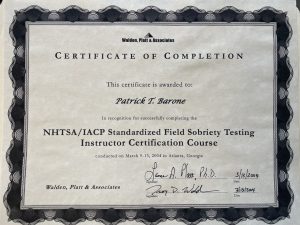
Mr. Barone is an IACP/NHTSA certified Standardized Field Sobriety Test instructor and practitioner, a judicially qualified SFST court expert, and a graduate of the Gerry Spence Trial Lawyers College. His work focuses on combining courtroom advocacy, forensic analysis, and strategic case preparation to protect clients facing life-changing criminal accusations.
Talk to a Michigan Criminal Defense Lawyer About Bond Conditions
Bond conditions can affect nearly every part of a person’s life while a criminal case is pending. The time to address those conditions is usually before arraignment, before a violation occurs, and before an impractical order creates avoidable problems.
Barone Defense Firm represents clients in serious misdemeanor and felony cases throughout Michigan. If you or a loved one is facing arraignment, bond review, or a dispute over pretrial release conditions, contact an experienced Michigan criminal defense lawyer as early as possible. Call 24/7 877-ALL-MICH (877-255-6424).