Search
 Michigan Criminal Defense Lawyer Blog
Do I need a DUI attorney for a first offense in Michigan?


When someone is charged with a first-offense OWI under MCL 257.625, the question of whether to hire a defense attorney is, in practical terms, not a question at all. Because the charge carries up to 93 days in jail, the Sixth Amendment right to counsel attaches to every such prosecution.
While a defendant may theoretically waive that right, Michigan courts actively discourage waiver in OWI cases and grant it only in rare circumstances, and when a waiver is granted, the defendant is held to precisely the same standard as a licensed attorney: full knowledge of the law, the Michigan Rules of Evidence, the Michigan Court Rules, and the customs and protocols of the court.
In over thirty years of practice, the attorneys at the Barone Defense Firm have seen self-representation in a Michigan OWI case succeed almost never. The real question is not whether counsel is required, but what a skilled first offense OWI attorney can accomplish that no defendant standing alone realistically can.
Is a DUI attorney legally required for a first-offense OWI in Michigan?
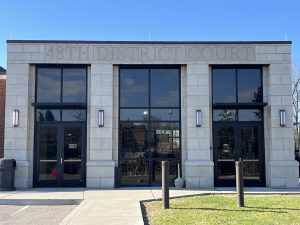 Yes – and the constitutional framework that makes it so reflects precisely what is at stake in every Michigan OWI prosecution. Under the Sixth Amendment to the United States Constitution and its Michigan counterpart in Const 1963, art 1, § 20, any defendant who faces the possibility of imprisonment must be represented by counsel or must validly waive that right before the case may proceed.
The Supreme Court established in Argersinger v. Hamlin, 407 U.S. 25 (1972), that counsel must be provided in any criminal prosecution, misdemeanor or felony, that actually leads to imprisonment, even for a brief period. The Court extended that rule to suspended sentences in Alabama v. Shelton, 535 U.S. 654 (2002), holding that a suspended jail term that may ultimately deprive a person of liberty cannot be imposed unless the defendant had the guiding hand of counsel in the original prosecution.
Because a standard first-offense OWI under MCL 257.625 carries up to 93 days in jail, the right to counsel attaches to every such charge. A Michigan court may not sentence a first-offense OWI defendant to jail, or to probation carrying a potential jail sanction for any violation, if that defendant was unrepresented and no valid waiver of counsel appears on the record.
A conviction obtained without counsel and without a proper waiver is vulnerable to reversal on direct appeal and to challenge on collateral attack. MCR 6.005 gives these requirements procedural form: the court must advise the defendant of the right to counsel at arraignment, offer to appoint counsel for indigent defendants, and conduct a formal waiver colloquy confirming the waiver is knowing, intelligent, and voluntary before allowing any defendant to proceed unrepresented.
Michigan district courts take these requirements seriously because a deficient record on the right to counsel creates the exact appellate and collateral exposure the rule is designed to prevent.
What a guilty plea entered without a full evidence review actually costs you.
The most common and most costly outcome for a defendant who proceeds without a full defense review is a guilty plea entered at arraignment or at the first pre-trial conference, before anyone has evaluated the evidence. That plea locks in whatever the prosecution has charged and waives rights that cannot be recovered afterward.
What a defendant does not know at that moment is whether the traffic stop was constitutionally valid, whether the field sobriety tests were administered in conformance with NHTSA standards, whether the Intoxilyzer 9000 was properly calibrated and operated by a certified technician, or whether the arresting officer’s account will survive cross-examination.
These are not exotic defenses reserved for complicated cases. They are the baseline issues a first offense OWI attorney evaluates in every case before recommending any disposition. Understanding the full range of OWI charge tiers under Michigan law, from OWVI to standard OWI to High BAC to DUI felony, is the prerequisite to understanding what a case is actually worth to the prosecution. A guilty plea entered without that analysis forecloses every one of those possibilities.
The 14-Day Implied Consent Deadline
When a Michigan OWI defendant refuses the post-arrest chemical test, a separate administrative proceeding is triggered alongside the criminal case. Under MCL 257.625e and MCL 257.625f, a defendant who refused the test has 14 days from the date of the written notice to request a Secretary of State hearing to challenge the license sanction. That window does not extend or reset. Missing it forfeits the right to contest the administrative action entirely, resulting in an automatic one-year license suspension for a first refusal. For defendants who refused the chemical test, retaining counsel promptly after arrest is the only way to protect against that default outcome. The attorneys at the Barone Defense Firm explain why the timing of hiring a DUI attorney in Michigan matters as much as the decision itself.
Can a Michigan DUI attorney help when the BAC result was above the legal limit?
Yes, and an elevated BAC reading is often precisely where skilled defense work matters most. A breath or blood test result does not establish, by itself, that the test was conducted properly, that the instrument was functioning accurately, that the operator was certified, or that the result correctly reflects the defendant’s actual blood alcohol concentration at the time of operating the vehicle. Even DUI tests that were properly administered can be inaccurate or misleading.
A first offense OWI attorney defending a breath test result will begin with the instrument itself: Michigan now uses the Intoxilyzer 9000 as its primary evidentiary breath testing instrument, having phased out the DataMaster DMT. Like any scientific instrument, the Intoxilyzer 9000 requires regular calibration, proper operation by trained personnel, and strict compliance with established procedure. A result generated by an improperly maintained instrument, operated by an uncertified technician, or collected in violation of protocol may be subject to challenge or exclusion. The same principles apply to blood draws: chain of custody, laboratory procedures, and analyst qualifications all bear on the admissibility and weight of the result.
Blood testing in a DUI case is also subject to testing, sometimes even more effectively than a breath test. While blood testing by gas chromatography is sometimes referred to as the gold standard, there are many potential problems with blood testing in a DUI case, starting with the blood draw itself and continuing on to the instrument used to test blood, the gas chromatograph. Many lawyers make the mistake of thinking blood tests cannot be defended; at the Barone Defense Firm we know this is not true, and have the success stories to prove it.
Beyond evidentiary challenges, an elevated BAC result affects charge posture directly. A result at or above 0.17 grams percent triggers Michigan’s High BAC statute, commonly called Super Drunk, which carries up to 180 days in jail and mandatory ignition interlock requirements. Whether a result near that threshold can be brought into question has direct and material consequences for the charge the defendant ultimately faces. A thorough review of Michigan’s first-offense OWI and High BAC penalties illustrates exactly how much turns on that single number.
“Success in a Michigan OWI case is most often measured by what does not happen to you – not solely by whether the charge is dismissed.”
How long does a drunk driving conviction follow you in Michigan?
The work of a first offense OWI attorney begins well before any court appearance. In a first-offense case, the defense attorney reviews the police report, the Intoxilyzer 9000 printout, the COBRA data, the arresting officer’s certification records, and any available video evidence, dashcam, body camera, or in-car footage from the scene. From that review comes an assessment of what is worth challenging, what is not, and what the realistic range of outcomes looks like for this defendant in this court before this judge.
From that foundation, the attorney pursues whichever combination of available paths the facts support. A constitutional challenge to the traffic stop or the arrest may eliminate the evidence on which the prosecution depends. A scientific challenge to the breath or blood test evidence may reduce or negate the significance of the BAC result.
A negotiated reduction from OWI to operating while visibly impaired, OWVI under MCL 257.625(3), carries lower statutory penalties and does not trigger the same license sanctions as a full OWI conviction. Where the evidence supports it, trial remains an option. The full range of Michigan OWI penalties across charge tiers makes clear why the distinction between an OWI and an OWVI conviction is consequential for driving privileges, fines, and future exposure.
The attorney may also evaluate your circumstances, the court you’re in and other important factors and advise on what to do before sentencing: completing alcohol screening voluntarily, beginning counseling, assembling character references, and demonstrating to the court that the defendant has engaged with the charge constructively. Because the judge on your case retains discretion over probation length and conditions, these proactive steps frequently affect outcomes in ways the statutory penalty range alone cannot predict.
Attorney Insight
Every first offense OWI attorney at the Barone Defense Firm has represented defendants in district courts across Michigan for more than thirty years. The firm practices OWI defense exclusively, which means that every case, including a first offense that might appear straightforward on paper, receives the same systematic review of the stop, the test, the charging decision, and the sentencing environment. A first-offense OWI conviction rarely ends a life, but a DUI can end a career, and combined with probation conditions that affect employment, travel, and driving privileges, it can reshape one in ways that reach far beyond the courtroom. The decision to invest in a thorough defense at this stage is almost always less costly than the decision to move past it quickly.
Frequently Asked Questions: First-Offense OWI and Legal Representation in Michigan
Is a DUI attorney legally required for a first offense in Michigan?
Yes. Because a first-offense OWI under MCL 257.625 carries up to 93 days in jail, the Sixth Amendment right to counsel attaches to the prosecution. Under Alabama v. Shelton, 535 U.S. 654 (2002), a court cannot impose a jail sentence, including a suspended one, in a proceeding where the defendant was unrepresented and no valid waiver of counsel is on the record. MCR 6.005 requires Michigan courts to conduct a formal waiver colloquy before permitting any defendant to proceed without counsel on a charge punishable by imprisonment. In practice, Michigan district courts do not allow defendants to proceed through OWI cases without counsel because a conviction obtained without a proper waiver on the record is vulnerable to reversal on appeal and challenge on collateral attack.
What are the penalties for a first-offense OWI conviction in Michigan?
A standard first-offense OWI under MCL 257.625(9)(a) carries up to 93 days in jail, fines ranging from $100 to $500, up to 360 hours of community service, a 30-day license suspension followed by 150 days of restricted driving privileges, and possible vehicle immobilization. If the reported BAC is 0.17 grams percent or higher, the High BAC provision under MCL 257.625(1)(c) applies, increasing the potential jail term to 180 days and imposing mandatory ignition interlock requirements.
Can a first-offense OWI in Michigan be reduced to a lesser charge?
In many cases, yes. A negotiated reduction from OWI to operating while visibly impaired (OWVI) under MCL 257.625(3) is a common outcome where the evidence supports it. An OWVI conviction carries lower statutory penalties and does not trigger the same license suspension as an OWI conviction. Some Michigan courts also offer diversion programs or sobriety court participation that may result in dismissal upon successful completion. The availability of these options depends on the specific facts of the case, the court assigned to the matter, and the prosecutor’s practice in that jurisdiction.
How long do I have to act after a first-offense OWI arrest in Michigan?
For defendants who refused the post-arrest chemical test, the most pressing deadline is the 14-day window under MCL 257.625f to request a Secretary of State hearing challenging the implied consent license sanction. Missing that deadline forfeits the right to contest the administrative action and results in an automatic one-year license suspension. For all defendants, evidence preservation, requesting dashcam footage, body camera recordings, and Intoxilyzer 9000 maintenance records, is time-sensitive, as some materials are not retained indefinitely. These time pressures are among the primary reasons defense attorneys advise retaining counsel immediately after arrest.
Does a Michigan first-offense OWI conviction stay on your record permanently?
A first-offense OWI conviction remains on the Michigan driving record permanently for lookback purposes regardless of any other relief. For the criminal record, however, Michigan’s 2021 Clean Slate Act created a limited path for relief: under MCL 780.621d, a defendant may petition to have a single first-offense OWI conviction set aside after five years from discharge from probation, provided the conviction is the defendant’s only OWI conviction and no subsequent convictions appear on the record.
The petition requires a court hearing and is not automatic. Only one such set-aside is available in a lifetime, a second or subsequent OWI conviction is not eligible, and even a granted set-aside does not remove the conviction from the driving record under MCL 780.621c(5). The prior conviction also continues to count for enhancement purposes in any future OWI prosecution.
Every first-offense OWI in Michigan is a criminal charge with consequences that reach beyond the courtroom into employment, licensing, travel, and permanent record. The Barone Defense Firm has represented first-offense defendants in district courts across Michigan for more than thirty years. Call 1-877-ALL-MICH (877-255-6424) for a free, confidential consultation available around the clock, or contact the firm online.
About the Author
 Patrick Barone is the founding attorney of the Barone Defense Firm and the author of five books on OWI defense, including Defending Drinking Drivers (James Publishing), a standard defense reference used by attorneys across the country. He is recognized annually by Michigan Super Lawyers (continuously since 2007) and Best Lawyers in America.
He is a certified NHTSA/IACP Standardized Field Sobriety Test instructor and has been judicially qualified as a court expert on field sobriety testing in Michigan, a distinction believed to be unique among practicing Michigan attorneys. The Barone Defense Firm is headquartered in Birmingham, Michigan, with offices in Grand Rapids, and practices criminal defense exclusively, with a focus on DUI defense.