Search
 Michigan Criminal Defense Lawyer Blog
Heidi’s Law: Why Your 3rd Michigan DUI is a Lifetime Felony


A third DUI arrest in Michigan is a felony under Heidi’s Law, a Class E felony carrying one to five years in prison, mandatory minimum jail time, and a license revocation measured in years rather than months. It does not matter when your prior convictions occurred. Two DUI convictions from thirty years ago can transform today’s arrest into a felony.
That is the weight of what you are facing. It is also not the end of the story. An arrest is not a conviction, and the outcome of a third-offense Michigan DUI case depends heavily on decisions made in the days and weeks immediately following the arrest. If you are facing a Heidi’s Law Michigan DUI charge, the decisions you make right now will shape every outcome that follows.
What Is Heidi’s Law and How Does It Affect Your Michigan DUI Case?

Heidi’s Law, named for Heidi Steiner, a sixteen-year-old killed by a repeat drunk driver whose prior convictions had expired under Michigan’s old ten-year look-back rule, was signed into law effective January 3, 2007.
Before that date, Michigan’s OWI statute allowed prior convictions more than ten years old to fall off a driver’s record for felony enhancement purposes. A person with two DUI convictions from 1985 and 1992 who was arrested in 2006 faced a misdemeanor, not a felony.
Heidi’s Law permanently ended that reset. Under MCL 257.625, any person with two prior alcohol-related driving convictions anywhere in their lifetime, in Michigan or in any other state whose law substantially corresponds to Michigan’s, faces a felony charge upon a third arrest. The age of the prior convictions is irrelevant.
Patrick Barone analyzed the implications of Heidi’s Law for Michigan defense attorneys in a February 2007 article in the SADO Criminal Defense Newsletter (Vol. 30.5), entitled Heidi’s Law Removes 10 Year Look-Back for Felony Drunk Driving, published the same month the law took effect, and has defended third-offense felony cases under this statute ever since.
As he pointed out back then, there is no longer any look-back period, and there is no exception. Every Heidi’s Law Michigan DUI case today is evaluated against a lifetime record with no reset available.
What Most People Don’t Understand: Charge Enhancement Is Only Half the Problem
Most people who call us after a third-offense arrest understand that Heidi’s Law turns their case into a felony. What almost no one understands is that their prior record will continue to affect them even if the charge is not enhanced. This distinction between charge enhancement and sentence enhancement is one of the most important and least understood aspects of Michigan OWI law.
Charge enhancement refers to the process by which prior convictions elevate a new OWI arrest from a misdemeanor to a felony under Heidi’s Law. If the charge is successfully negotiated down to a first or second offense misdemeanor, which experienced defense counsel can sometimes achieve, the maximum penalty drops significantly and the felony designation is avoided.
Sentence enhancement is different. It means that even if a case resolves as a first-offense misdemeanor with a maximum of 93 days, or a second-offense misdemeanor with a maximum of one year, the judge is not obligated to treat the defendant as if the prior record does not exist.
Michigan sentencing law gives judges broad discretion to consider the totality of a defendant’s history. A first-offense misdemeanor with two decades of prior DUI convictions will not be sentenced the same way as a true first-offense case.
The judge knows who is standing in front of them. This is why sentencing mitigation is indispensable in every Heidi’s Law Michigan DUI case regardless of how the charge resolves.
This means that even when the defense achieves a significant charge reduction, sentencing mitigation remains the most important work in the case. The reduction in the charge ceiling is only the beginning of the conversation about what happens next.
How Can a Lawyer Defend a Heidi’s Law Michigan DUI Charge?
Every defense available in a first or second offense OWI case is equally available in a third-offense case. The lawfulness of the traffic stop, the constitutional validity of the arrest, the calibration and maintenance of the Intoxilyzer 9000, the chain of custody and laboratory procedures for a blood draw, all of these can be challenged and can result in suppression of evidence or dismissal of charges regardless of the number of prior convictions on the record.
Third-offense cases also open additional defense avenues that do not exist at the misdemeanor level. Because the case is a felony, the defendant has a right to a preliminary examination within 21 days of arraignment. While many attorneys reflexively waive the preliminary examination thinking there are no viable issues to contest at this stage, a preliminary examination is often the single best opportunity to obtain sworn testimony from the arresting officer, eyewitnesses, and the forensic analyst under conditions that are rarely available at trial.
Can a Prior DUI Conviction Be Challenged to Reduce a Felony Charge?
Here is the complete section. Apply the H2 heading using the WordPress toolbar, then paste the four paragraphs as normal text beneath it.
Can a Prior DUI Conviction Be Challenged to Reduce a Felony Charge?
Rarely available but transformative when it exists, a challenge to the constitutional validity of one of the prior convictions being used to elevate the current charge to a felony is one of the most powerful tools in a third-offense defense. The Sixth Amendment guarantees every criminal defendant the right to counsel.
A conviction obtained without counsel, and without a valid waiver of that right, cannot be used to enhance a later sentence. This principle applies directly to prior OWI convictions used for Heidi’s Law enhancement purposes.
What this means in practice is that a thorough defense attorney reviews not just the fact of each prior conviction, but the record of how it was obtained. If a prior plea-based OWI conviction was entered without counsel and resulted in actual incarceration, it may be subject to a collateral attack, a legal challenge brought in the current case that asks the court to disregard that prior for enhancement purposes.
The challenge is narrow: it applies only to Sixth Amendment right-to-counsel violations, not to procedural irregularities or other defects in the prior proceeding.
The Michigan Supreme Court addressed this precise issue in the OWI context in People v Ward, 459 Mich 602 (1999), confirming that challenges grounded in a genuine Sixth Amendment right-to-counsel violation are available, while making clear that courts will scrutinize delayed challenges carefully and that procedural defects in a prior plea where counsel was present will not suffice.
When the facts genuinely support it, the payoff is fundamental. If one of the two prior convictions is successfully challenged and removed from the enhancement calculation, the current charge drops from a felony to a misdemeanor. That reduces the maximum possible sentence from five years in state prison to 93 days in a county jail, a significant difference, but the more consequential benefit is often the avoidance of a felony record entirely.

A felony OWI conviction triggers the permanent loss of firearm rights under both Michigan and federal law, creates serious barriers to employment particularly in licensed professions, and can result in the revocation of a professional license for healthcare providers, attorneys, pilots, teachers, and others whose careers depend on licensure.
For many clients, it is the felony designation itself, not the jail time, that represents the greatest threat to their future.
This is one of the reasons the Barone Defense Firm begins a complete review of every prior conviction from the first consultation in a third-offense case, not from the week before the preliminary examination.
Is the 30-Day Jail Minimum Still Mandatory in a Heidi’s Law Michigan DUI Case?
Michigan law sets a mandatory minimum of 30 days in jail for a third-offense OWI conviction under MCL 257.625(9)(c). That minimum is no longer mandatory in every case. The statute was amended to add MCL 257.625(9)(d), which now provides: ‘A term of imprisonment imposed under subdivisions (b) or (c) must not be suspended unless the defendant agrees to participate in a specialty court program and successfully completes the program.’
In plain terms, where an approved specialty court, a sobriety court, is available and the defendant is admitted and successfully completes the program, the mandatory minimum jail term does not apply.
This statutory exception is the most significant sentencing development in Michigan third-offense OWI law in recent years. But accessing it requires more than identifying an available sobriety court. The defense must persuade the prosecutor to agree and the court to accept a sentencing structure built around treatment court participation.
This is the kind of arrangement Michigan practitioners seek through Killebrew and Cobbs agreements. Under People v Killebrew, 416 Mich 189 (1982), a sentence recommendation is negotiated between defense counsel and the prosecutor and presented to the court.
Under People v Cobbs, 443 Mich 276 (1993), the court itself provides a preliminary evaluation of the proposed sentence before the plea is entered, giving the defendant the right to withdraw the plea if the judge later determines the sentence must exceed that evaluation.
Securing a no-jail treatment court sentence through this framework is not available in every jurisdiction or every case, and it cannot be assembled in the weeks before sentencing. It requires a defense attorney who has built the clinical, human, and legal case for treatment court admission beginning from the first day of representation.
The Question Every Judge Asks: Why Will This Time Be Different?
Every person who has stood before a judge on a second DUI conviction said it would never happen again. The judge remembers this, not necessarily the specific individual, but the pattern. A third-offense defendant faces a credibility problem that is more challenging than anything presented by the legal evidence: why should anyone believe that this time, after multiple prior convictions, multiple prior sentences, and multiple prior promises, this particular person will actually stop offending? That is the central credibility challenge in every Heidi’s Law Michigan DUI sentencing hearing.
This question is the core of what must be answered at sentencing, and answering it requires something more than remorse and good intentions. The judge, the prosecutor, and the probation department will all arrive at a third-offense case with a working assumption: this person has a substance use disorder.
That assumption is not unfair given the history, and fighting it head-on is rarely productive. What is productive is meeting it directly with a credible, documented, and clinically informed response.
This is the work of sentencing mitigation, and in a third-offense case it is the most consequential work the defense team does. The Barone Defense Firm’s approach to sentencing mitigation is built on a framework developed by Doug Passon, a nationally recognized sentencing specialist and the firm’s of-counsel sentencing advocate.
Passon introduced the Three Rs of Sentencing Storytelling, Revelation, Redemption, and Relativity, in a 2021 article in The Champion, the journal of the National Association of Criminal Defense Lawyers. Patrick Barone and Doug Passon subsequently co-authored a follow-up article in The Champion in 2024, applying psychodrama techniques to the mitigation process to surface the deeper human narrative that purely legal advocacy cannot reach.
Revelation means giving the judge and prosecutor a fuller, more human picture of the life circumstances that shaped the choices made, context that never appears in a police report but that any fair-minded decision-maker would want to understand.
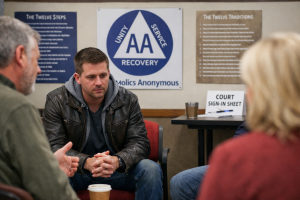 Redemption means demonstrating genuine, documented, and credible change, not promised change, not intended change, but change that is already underway and can be verified.
Relativity means contextualizing the proposed sentence against similarly situated defendants and the relative severity of the conduct, an argument more naturally suited to the sentencing memorandum than to a personal character letter.
In a third-offense case, the difference between a defendant who has merely shown up for sentencing and a defendant who has worked with counsel from the day of arrest to build a compelling, documented, and differentiated mitigation narrative is often the difference between prison and a treatment-based alternative. That work cannot begin the week before sentencing.
Patrick Barone has been defending third-offense OWI cases under Heidi’s Law since the statute took effect in January 2007, longer than most attorneys who handle these cases have been in practice. He wrote about the law’s implications for defense attorneys in the SADO Criminal Defense Newsletter that same month, before the courts had even begun to apply it.
In the nearly two decades since, the pattern he identified then has only intensified: the elimination of the look-back period means the firm now regularly defends clients whose prior convictions are from the 1980s and 1990s, offenses that would have been invisible under the old law.
The challenge in those cases is not primarily legal, it is human. Patrick’s board certification in psychodrama, sociometry, and group psychotherapy, and his team’s training in the same methods, is what equips the Barone Defense Firm to do the mitigation work in third-offense cases that other attorneys simply are not trained to do.
The goal is not to explain why the client offended again. It is to answer the harder question: why, this time, they will not.
Frequently Asked Questions About Heidi’s Law and Third-Offense Michigan DUI
Does Heidi’s Law apply if my prior convictions are from another state?
Yes. Michigan counts convictions from other states if that state’s law substantially corresponds to Michigan’s OWI statute. Because virtually every state’s DUI law meets this standard, out-of-state convictions, even from decades ago, will be counted for felony enhancement purposes.
Does Heidi’s Law violate the ex post facto clause of the Constitution?
No. The Michigan Court of Appeals definitively resolved this question in People v Perkins, 280 Mich App 244 (2008), holding that Heidi’s Law does not punish the prior offenses themselves, but rather uses them to calibrate the penalty for the current offense, which is constitutional. Arguments based on the ex post facto clause are not a viable defense strategy.
What is the difference between a felony OWI and a misdemeanor OWI in terms of where you serve time?
A misdemeanor OWI conviction results in jail time served in a county facility, with a maximum of one year. A felony OWI conviction carries one to five years in a state prison, along with a 30-day minimum that can be modified only where a treatment court alternative is available. A felony conviction also triggers the loss of firearm rights under both Michigan and federal law.
Can a third-offense felony OWI be reduced to a misdemeanor?
In some cases, yes. A successful challenge to the constitutional validity of a prior conviction, a suppression of chemical test evidence that weakens the prosecution’s case, or a negotiated resolution at the Probable Cause Conference can result in a charge reduction to a second-offense misdemeanor. This is not available in every case and depends heavily on the specific facts, the jurisdiction, and the prosecutor’s office policies. Oakland County, for example, maintains restrictive policies on charge reductions in OWI cases.
Can a felony OWI conviction be expunged in Michigan?
No. Under Michigan’s Clean Slate legislation, a first-offense OWI conviction may be eligible for expungement after a five-year waiting period. Third-offense felony OWI convictions are currently ineligible for expungement and remain on the record permanently.
What should I do immediately after a third-offense OWI arrest?
A third-offense OWI under Heidi’s Law is one of the most serious criminal charges a Michigan driver can face. It is also a charge that is rarely as simple, or as hopeless, as it first appears. The Barone Defense Firm has defended these cases since the day the law took effect, and no firm in Michigan brings greater depth of legal, scientific, and human understanding to the work of third-offense OWI defense.
When you are facing a Heidi’s Law Michigan DUI charge, that depth of experience is available to you from the first call. Call 1-877-ALL-MICH (877-255-6424) for a free, confidential consultation available 24 hours a day.
About the Author

He wrote the books!
Patrick Barone is the founding attorney of the Barone Defense Firm and has defended third-offense OWI cases under Heidi’s Law since the statute took effect in January 2007. He analyzed the law’s implications for Michigan defense attorneys in a February 2007 article in the SADO Criminal Defense Newsletter (Vol. 30.5), published the month the law became effective.
Patrick Barone has authored chapters in multiple volumes of the nationally published Inside the Minds practitioner series, including chapters on DUI vehicular homicide defense, defense witness preparation, and trial strategy in search and seizure cases. He also authored Chapter 13 on traffic offenses and OWI in Michigan Criminal Law and Procedure with Forms, published by LexisNexis, the standard reference treatise used by Michigan criminal practitioners.
He is an IACP/NHTSA-certified standardized field sobriety test instructor and practitioner and is believed to be the only attorney in Michigan ever to have been judicially qualified as an SFST court expert. He has been named a Michigan Super Lawyer continuously since 2007 and is recognized by Best Lawyers in America.
He is a graduate of the Gerry Spence Trial Lawyers College and holds board certification at the highest level in psychodrama, sociometry, and group psychotherapy through the American Board of Examiners, a credential held by no other attorney in Michigan, which, together with the firm’s partnership with sentencing specialist Doug Passon, positions the Barone Defense Firm to do the sentencing mitigation work in third-offense cases at a depth that other attorneys simply are not equipped to match.