Search
 Michigan Criminal Defense Lawyer Blog
Michigan Drug Recognition Experts: What DRE Evaluations and Roadside Drug Tests Really Show


Michigan drug recognition experts, usually called DREs, are police officers trained to investigate suspected drug-impaired driving. In the right case, police may combine roadside observations, field sobriety tests, a DRE evaluation, and chemical testing to try to prove an OWI based on drugs. But those pieces of evidence do not all prove the same thing. Presence of a drug is not the same as actual impairment, and in marijuana cases that distinction matters a great deal.1234
What Is a Michigan Drug Recognition Expert?
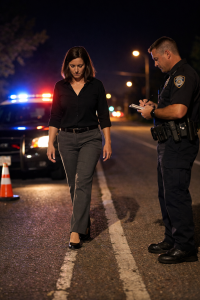 Michigan drug recognition experts are defined broadly by statute, but the courtroom question is usually more specific. Under MCL 257.625t, the term means a law enforcement officer trained to recognize impairment in a driver under the influence of a controlled substance rather than, or in addition to, alcohol.1 The Michigan State Police Drug Recognition Expert Program, however, describes a more structured certification path. MSP explains that applicants must complete SFST and ARIDE prerequisites, DRE classroom training, field certification training, and biannual recertification.2
That difference matters. A statute may use a broad label, but in court the important questions are usually more specific: what training the officer actually completed, whether the officer followed the protocol correctly, whether the observations were reliable, and whether the officer is being offered as a true expert under Michigan evidence law.125
If you want more background on how drug recognition experts are used in Michigan impaired-driving cases, this issue deserves close attention because the label “expert” does not answer the admissibility question by itself.
How Michigan Drug Recognition Experts Conduct a DRE Evaluation
A DRE evaluation is not normally just a quick roadside glance. MSP says the evaluation is typically conducted after arrest, in a controlled environment such as a police station, detention facility, or other secure setting.2 The International Association of Chiefs of Police describes the DRE process as a structured 12-step protocol that begins by comparing the driver’s apparent impairment to the breath alcohol result and then moves through a series of observations and tests.3
Those steps include review of the breath result, interview of the arresting officer, a preliminary examination, eye examinations, divided-attention testing, vital signs, dark-room pupil observations, muscle-tone examination, review for injection sites, post-Miranda questioning, the evaluator’s opinion, and toxicological testing.3 In other words, the DRE is not supposed to be a magic label. It is supposed to be a method. That means the method can be examined, and if the method was not followed carefully, the opinion built on it can be challenged.
What Michigan Drug Recognition Experts Say Roadside Saliva Tests Show
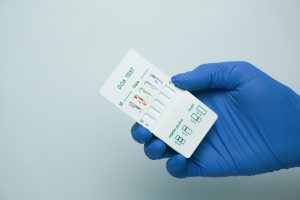 Michigan drug recognition experts may also use roadside oral-fluid testing in the limited pilot-program framework authorized by current law. Under MCL 257.625r, a certified DRE in a participating county may require a preliminary oral-fluid analysis when the officer has reasonable cause to believe the driver may be affected by a controlled substance or has certain listed substances in the body. The statute also provides that a person may be arrested in whole or in part on the preliminary oral-fluid result, but it sharply limits how that result may later be used in court.6
That limited admissibility is important. A roadside oral-fluid result is not the same as a final laboratory toxicology result, and it is not a shortcut to proving actual impairment. NHTSA’s report to Congress states that oral-fluid testing can be useful in detecting many drugs and may be helpful in identifying recent drug use. But the same report states that point-of-arrest screening devices have not been shown to be completely accurate and reliable, and that marijuana detection in oral fluid raises additional interpretation problems.4
For more on roadside saliva testing for drugs, and how the state has moved toward wider use of these tools, see also our discussion of more police officers trained to use roadside drug tests and Michigan roadside saliva testing for marijuana use.
Why Marijuana Cases Are Harder Than Michigan Drug Recognition Experts Often Suggest
Marijuana cases are often the hardest drug-impaired-driving cases to prove correctly. Michigan law draws an important distinction in the medical-marijuana context. In People v. Koon, the Michigan Supreme Court held that a registered medical-marijuana patient is not automatically stripped of protection merely because marijuana is present in the body. The Court made clear that “under the influence” requires something more than mere presence and requires an actual effect on the person’s ability to operate safely.7
The science creates the same problem from a different angle. A test may support an argument about recent use or drug presence, but that does not automatically establish legally significant impairment. That distinction is central in many operating under the influence of drugs cases, especially those involving marijuana, prescription medication, or mixed-substance allegations.
For readers trying to understand how police claim to identify stoned drivers, this is also where DRE evidence becomes important. It is often presented as if it bridges the gap between use and impairment. In practice, that bridge is often far weaker than the police report makes it sound. We discuss that issue further here: how police claim to identify stoned drivers.
What People v. Bowden Means for Michigan Drug Recognition Experts
People v. Bowden is now the most important published Michigan case addressing expert testimony from Michigan drug recognition experts in a marijuana-impaired-driving prosecution. The Michigan Court of Appeals held that the prosecution had not shown the DRE protocol to be a reliable method for proving the degree of marijuana impairment or whether the defendant’s alleged intoxication rendered her unable to drive safely. On that record, the court held the proposed expert testimony inadmissible under MRE 702.5
Just as important, Bowden was not framed as a blanket ban on all testimony from the officer. The Court explained that its holding did not preclude lay testimony to the extent otherwise admissible. What Bowden blocks is the shortcut argument that a DRE label alone transforms a subjective marijuana-impairment opinion into reliable expert testimony.5
That gives defense lawyers and trial courts a sharper framework than existed when this topic first emerged in Michigan. The question is no longer just whether an officer has DRE training. The question is whether the state can satisfy Michigan’s reliability requirements for the exact opinion it wants to introduce.
Common Weak Points in Cases Involving Michigan Drug Recognition Experts
In our experience, these cases often turn on ordinary details rather than slogans about “drug recognition.” Timing matters. If the alleged driving, the stop, the field tests, the DRE evaluation, and the chemical sample are spread out over hours, the prosecution’s theory can become less precise.
Protocol matters too. A DRE evaluation is supposed to be standardized. If the officer skipped steps, documented them poorly, ignored possible medical explanations, or overstated what the protocol can show, the opinion becomes easier to attack.235
The same is true of toxicology. A toxicology result may show that a substance was present. It may not answer when it was consumed, in what amount it affected the driver, whether the observed behavior had another explanation, or whether the officer’s conclusions match the actual science.457
Attorney Insight on Michigan Drug Recognition Experts and Oral-Fluid Cases
When we review a suspected drugged-driving case, we do not start with the assumption that a DRE opinion settles anything. We want to see the video, the officer’s timeline, the reason for the stop, the breath result, the field sobriety instructions, the DRE worksheets, the toxicology request, the laboratory result, and the gap between what was observed and what was later claimed.
In marijuana cases especially, we focus on whether the police and prosecutor are quietly conflating three separate ideas: use, presence, and impairment. Those terms are often blurred together in police reports. They should not be. Bowden gives courts a framework for separating them, and the science gives the defense a reason to insist on that separation.45
This is also why these cases should not be approached like routine alcohol OWI matters. The proof model is different, the science is less linear, and the officer’s training does not eliminate the court’s duty to examine reliability carefully.
Frequently Asked Questions About Michigan Drug Recognition Experts
Can Michigan drug recognition experts arrest me based on a saliva test?
Under the current oral-fluid statute, a certified DRE in a covered county may arrest in whole or in part on the preliminary oral-fluid result, but the statute also sharply limits how that result may later be used in court.6
Do Michigan drug recognition experts prove actual impairment?
No. At most, it may support an argument about recent drug presence or use. It does not automatically prove actual impairment.4
Did Bowden limit testimony from Michigan drug recognition experts?
No. Bowden rejected the proposed expert marijuana-impairment testimony on the record presented there. The Court also said its holding did not amount to a blanket prohibition on lay testimony where otherwise admissible.5
Could Michigan expand how drug recognition experts use oral-fluid testing?
Possibly. In 2025, Michigan House Bills 4390 and 4391 were introduced to expand Michigan law to allow oral-fluid collection and testing more broadly, and NTSB submitted testimony supporting that change. That is a development worth watching, but it is separate from what current law already authorizes.8
Charged With a Michigan OWI Based on Marijuana, Prescription Drugs, or a DRE Investigation?
Drug-impaired-driving cases often look stronger on paper than they do under close legal and scientific review. If your case involves roadside saliva testing, a DRE evaluation, or a claim that drug presence equals impairment, the evidence should be reviewed early.
You can also review our page on Michigan OWI penalties and consequences for a broader overview of what may be at stake.
About the author:
 Patrick T. Barone is the founder of Barone Defense Firm and a nationally recognized Michigan criminal defense attorney whose practice focuses on OWI, DUI, and other cases involving complex forensic evidence. He is an IACP/NHTSA-certified Standardized Field Sobriety Test instructor and practitioner, has been judicially qualified as an SFST expert, and has received manufacturer certification on the DataMaster DMT.
His background includes undergraduate training in biology on a pre-medical track, which informs his work in cases involving breath testing, blood testing, drug recognition evaluations, and other scientific issues. Patrick writes and speaks frequently on OWI defense, forensic science, and trial strategy, and is the author of five books, including Defending Drinking Drivers. Through his writing, he aims to help readers better understand how impaired-driving cases are investigated, how scientific evidence can be challenged, and why legal outcomes often turn on details that are easy to miss in the police report.
Sources
- Mich. Comp. Laws § 257.625t, defining a certified drug recognition expert. Read the statute. ↩
- Michigan State Police, Drug Recognition Expert Program (DRE). Read the MSP page. ↩
- International Association of Chiefs of Police, 12 Step Process. Read the IACP protocol summary. ↩
- National Highway Traffic Safety Administration, Marijuana-Impaired Driving: A Report to Congress (2017). Read the report. ↩
- People v. Bowden, 344 Mich. App. 171, 999 N.W.2d 80 (2022). Read the opinion. ↩
- Mich. Comp. Laws § 257.625r, governing preliminary oral-fluid analysis in the current pilot-program framework. Read the statute. ↩
- People v. Koon, 494 Mich. 1, 832 N.W.2d 724 (2013). Read the opinion. ↩
- House Bill 4390 of 2025 and House Bill 4391 of 2025, plus NTSB testimony supporting broader oral-fluid testing. HB 4390; HB 4391; NTSB testimony. ↩