Search
 Michigan Criminal Defense Lawyer Blog
Understanding the Disconnect Defense in a Michigan DUI Case


The disconnect defense in a Michigan OWI case applies when the chemical test result does not match the defendant’s observable behavior. If a breath or blood test reports a high BAC but the officer’s observations, police video, driving evidence, and field sobriety performance show little or no meaningful impairment, that inconsistency may create reasonable doubt.
This defense is especially important in high-BAC and Michigan Super Drunk cases, where the reported number is 0.17 or higher. At that level, prosecutors often expect a jury to assume serious impairment. But a high BAC number also creates a higher evidentiary expectation. If the person on the video does not look, speak, walk, or perform like someone at the reported BAC, the number itself may become vulnerable.
The disconnect defense does not prove that the driver was sober. It asks a more precise trial question: does the chemical result fit the person the officer actually observed?
A properly developed disconnect defense Michigan OWI strategy uses the prosecution’s own evidence, including dash camera video, body camera video, field sobriety test notes, officer testimony, breath-test records, blood-test documentation, and internal instrument data, to show that the number and the human evidence are telling different stories.
What Most People Get Wrong About a High BAC in a Michigan OWI Case
Many people assume that a high BAC automatically means the case cannot be defended. That assumption is incomplete. A chemical test result is important evidence, but it is not the only evidence. In a Michigan OWI case, the prosecution must prove the charge under a legally recognized theory, and the chemical result must be evaluated against the rest of the record including all of the observation evidence.
The disconnect defense focuses on the gap between what the machine reported and what the officer actually saw. A high number may be damaging, but it may also create an evidentiary problem for the prosecution if the defendant’s behavior does not match the level of intoxication the number suggests.
This is why police video matters. The video may show clear speech, appropriate responses, normal balance, steady walking, good comprehension, or field sobriety performance that does not fit the reported BAC. When that happens, the defense can argue that the jury should not accept the number without questioning whether it accurately reflects the defendant’s true bodily alcohol level at the time of driving.
What Is the Legal Basis for the Disconnect Defense in a Michigan OWI Case?
Michigan’s OWI statute, MCL 257.625, allows the prosecution to prove operating while intoxicated under more than one theory. One theory focuses on whether alcohol, a controlled substance, or another intoxicating substance affected the person’s ability to operate. Another common theory focuses on whether the person operated with an unlawful bodily alcohol level.
In practical trial terms, this means the prosecution may rely on both behavioral evidence and chemical-test evidence. Michigan jury instructions recognize that when both theories are submitted, the jury does not necessarily have to agree on which theory applies, so long as all jurors agree that the defendant violated MCL 257.625 in at least one fashion.
The disconnect defense attacks the behavioral theory directly. If the officer’s own testimony, roadside video, and field sobriety evidence do not show meaningful impairment, the prosecution’s ability to prove operating under the influence becomes weaker.
The defense also attacks the chemical-test theory indirectly. When a high BAC number is paired with clear speech, normal balance, coherent responses, and acceptable field sobriety performance, the jury has a reason to ask whether the test result is reliable.
Because Michigan OWI can be proved through either an impairment theory or an unlawful bodily alcohol level theory, the disconnect defense must account for both. More detail on Michigan OWI proof under the OUIL and UBAL theories is available on the firm’s main OWI practice page.
The disconnect defense is strongest when the prosecution’s behavioral evidence is weak. If the video, officer testimony, driving observations, and field sobriety testing already show clear impairment, the defense loses much of its force. The first question is not simply whether the BAC is high. The first question is whether the rest of the evidence looks like that BAC.
How Does the Dubowski Framework Help Explain the Disconnect?
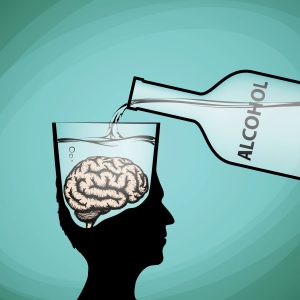
The most commonly cited scientific framework for relating BAC levels to expected signs of alcohol influence comes from the work of Dr. Kurt M. Dubowski. Dubowski’s stages of acute alcoholic influence identify general behavioral signs associated with increasing BAC ranges, including changes in emotional control, sensory-motor function, coordination, speech, orientation, and consciousness.
The Dubowski framework can be useful in a Michigan OWI trial because it gives the defense a scientifically recognized reference point. If the chemical test says the defendant was at a BAC level commonly associated with slurred speech, staggering, disorientation, or marked incoordination, but the officer recorded none of those observations, the inconsistency becomes evidence the jury can evaluate.
The defense should not overstate the Dubowski table. The stages describe population-level expectations, not a guarantee that every individual will display identical symptoms at the same BAC. Individual response may vary based on drinking pattern, phase of the alcohol curve, habituation, health, timing, and other factors. Even so, when a reported BAC is high and the expected signs are absent, the gap between the number and the observations can be significant.
Dubowski Reference Points for Expected Signs of Alcohol Influence
| BAC Range | Commonly Associated Stage | Expected Signs Often Discussed in OWI Cases |
|---|---|---|
| 0.09 – 0.25 | Excitement | Emotional instability, impaired sensory-motor function, reduced coordination, slowed reaction time, and slurred speech may be expected. |
| 0.18 – 0.30 | Confusion | Disorientation, mental confusion, staggering gait, disturbed sensation, reduced pain response, and slurred speech become more expected. |
| 0.25 – 0.40 | Stupor | Marked muscular incoordination, impaired consciousness, reduced response to stimuli, and potential medical danger become significant concerns. |
| 0.35 – 0.50 | Coma | Unconsciousness, depressed reflexes, depressed breathing, and risk of death may become medical concerns. |
In a disconnect defense, this framework is not used to prove the defendant was sober. It is used to show that a high reported BAC should have produced observable evidence that the officer did not see, did not record, or could not explain.
Why Does BAC Usually Affect Different Functions as the Number Rises?
Alcohol is water soluble and distributes through the body’s water-containing tissues, including the brain. Once ethanol crosses the blood-brain barrier, it can affect multiple brain systems involved in judgment, speech, divided attention, balance, coordination, and vital autonomic function.
For courtroom purposes, the important point is not that alcohol moves through the brain in a perfectly fixed anatomical sequence. The important point is that different functions tend to become visibly affected as intoxication becomes more severe.
Functional Progression of Alcohol Impairment
| Function Affected | Why It Matters in a Michigan OWI Case |
|---|---|
| Higher-order judgment | At lower and rising BAC levels, alcohol may affect judgment, inhibition, divided attention, risk assessment, and decision-making. |
| Speech and divided attention | As BAC rises, problems with speech, comprehension, instruction-following, memory, and task switching may become more apparent. |
| Balance and motor control | At higher BAC levels, cerebellar and motor-control effects become more important. Problems with standing, walking, turning, balance, and coordination would ordinarily be more visible. |
| Severe intoxication and medical risk | At very high BAC levels, alcohol may depress central nervous system function, including brainstem-mediated respiratory control. |
At lower and rising BAC levels, alcohol often affects higher-order functions associated with the prefrontal cortex, including judgment, inhibition, divided attention, decision-making, and the ability to process information while performing another task. These are the same kinds of functions an officer may try to measure through divided-attention field sobriety tests and roadside questioning.
As the BAC rises further, alcohol’s effect on motor-control systems becomes more obvious. The cerebellum is especially important to balance, coordination, posture, and fine motor control. This is why a person with a genuinely high BAC would ordinarily be expected to show more visible problems with walking, standing, turning, following physical instructions, and maintaining balance.
At very high BAC levels, alcohol can become medically dangerous because it may depress central nervous system function, including brainstem-mediated respiratory control. This is one reason extremely high BAC results should be treated not merely as criminal evidence, but also as potential medical-risk evidence.
A very high BAC is not just a higher number on a police report. At levels commonly associated with stupor, depressed consciousness, or respiratory risk, the absence of expected clinical signs may raise a serious evidentiary question. The defense issue is whether the reported number fits the person the officer actually observed.
In some jurisdictions, very high BAC results may trigger medical-clearance or hospital-transport protocols before a person is lodged at the jail. Those protocols can matter in a disconnect case because they reflect the medical risk associated with extreme alcohol levels. Defense counsel should obtain and review the applicable police, jail, or county medical-clearance policy before making that argument in court.
What Role Does Alcohol Tolerance Play in a Michigan OWI Disconnect Defense?
Prosecutors sometimes respond to a disconnect defense by arguing that the defendant must have had a high tolerance to alcohol. The argument usually sounds simple: the BAC was high, the defendant appeared less impaired than expected, and therefore the defendant must have been an experienced drinker who could mask the signs of intoxication. However, this is a very misleading argument about alcohol tolerance that is not firmly rooted in the applicable science.
That argument should not be accepted without scientific foundation. Peer-reviewed research on alcohol tolerance is more limited and more nuanced than the argument suggests. Research published in Psychopharmacology found that heavy drinkers may show tolerance on some rote motor tasks, but not on more complex tasks involving motor speed, encoding, and short-term memory. Heavy drinkers may also report feeling less impaired while still showing objective impairment on important tasks.5
That distinction matters in court. A prosecutor should not be allowed to use tolerance as an all-purpose explanation for a high BAC and minimal visible impairment unless the evidence supports that claim. The defense response is not that tolerance never exists. The better response is that tolerance does not automatically explain away the disconnect, and it does not eliminate the prosecution’s burden to prove the reliability and meaning of the chemical-test result.
When Is the Disconnect Defense Most Likely to Help in a Michigan OWI Case?
The disconnect defense is most likely to help when several evidentiary conditions are present at the same time. The reported BAC is high enough that obvious signs of alcohol influence would normally be expected. The roadside video shows the defendant speaking clearly, walking normally, following instructions, and responding appropriately. The field sobriety evidence is either favorable or less damaging than the reported BAC would suggest. The officer’s report does not describe the kind of disorientation, staggering, confusion, or marked incoordination associated with the reported number.
The defense becomes stronger when the chemical-test evidence has its own vulnerabilities. In breath-test cases, those vulnerabilities may involve the Intoxilyzer 9000, the observation period, multiple breath attempts, exception codes, maintenance records, simulator solution records, radio-frequency interference data, or internal diagnostic information. In blood-test cases, the defense may focus on collection, preservation, chain of custody, analytical method, measurement uncertainty, contamination, or retrograde extrapolation.
This is why high-BAC cases require more than a review of the ticket. The number is only the beginning of the analysis. The defense must compare the number against the total evidentiary record.
Can the Disconnect Defense Apply in a Michigan Super Drunk Case?
Yes. The disconnect defense can be especially important in a Michigan Super Drunk case because the enhanced charge depends on a bodily alcohol level of 0.17 or higher. When the reported number is that high, the prosecution usually expects the jury to assume the case is difficult to defend. But a high number also creates a higher scientific expectation. If the defendant’s observable behavior does not match the reported BAC, the inconsistency may become a central defense issue.
Michigan Super Drunk cases carry enhanced penalties, including longer possible jail exposure, higher fines, and significant license consequences. For that reason, early review of the breath or blood evidence is critical.
Can the Disconnect Defense Lead to a Dismissal or Charge Reduction?
Sometimes. The disconnect defense more commonly creates negotiation leverage, supports a reduction from OWI to Operating While Visibly Impaired, or provides a trial defense. In unusual cases, if the chemical-test evidence is unreliable and the behavioral evidence is weak, the defense may support a motion practice strategy. Whether that strategy can produce a dismissal depends on the evidence, the court, the prosecutor, and the procedural posture of the case.
The key point is that the defense must be built early. Video should be obtained and reviewed. Breath-test records should be preserved and analyzed. Blood-test documentation should be examined. Field sobriety testing should be compared against NHTSA standards. The prosecution’s theory should be forced to account for the whole record, not merely the printed BAC result.
A disconnect defense is not a generic argument that the machine must be wrong. It is a structured comparison between the reported chemical result and the observable facts. The more complete the video, field sobriety, officer-observation, and instrument-data review, the stronger the defense becomes.
Frequently Asked Questions About the Disconnect Defense in Michigan OWI Cases
What is the disconnect defense in a Michigan OWI case?
The disconnect defense is a trial strategy that challenges an OWI charge by showing that the reported BAC does not match the defendant’s observable behavior. If the number is high but the video, officer observations, and field sobriety evidence show little or no meaningful impairment, the inconsistency may create reasonable doubt.
Does the disconnect defense only apply to Super Drunk cases in Michigan?
No. The defense is most powerful in high-BAC and Super Drunk cases because the expected signs of alcohol influence should ordinarily be more pronounced. But the defense can apply whenever the chemical-test result and the behavioral evidence materially conflict.
Can a prosecutor argue that alcohol tolerance explains the disconnect?
A prosecutor may try to make that argument, but the argument should be challenged when it is unsupported by evidence. Scientific research does not support using tolerance as a blanket explanation for every high-BAC case where visible impairment appears limited.
What evidence is needed to build a disconnect defense in a Michigan OWI case?
Important evidence includes dash camera video, body camera video, the officer’s report, field sobriety test performance, breath-test records, blood-test records, maintenance and calibration documentation, and any available internal diagnostic data from the testing instrument.
Does passing field sobriety tests prove the breath or blood test was wrong?
Not by itself. Passing or substantially performing field sobriety tests may help show a disconnect, but the defense must still evaluate the chemical-test evidence, the officer’s observations, and the testing process. The goal is to create reasonable doubt from the total record.
Can a very high BAC create a medical-risk issue in a Michigan OWI case?
Yes. At very high levels, alcohol can depress central nervous system function, including breathing. If a reported BAC suggests severe intoxication or medical danger but the person shows none of the expected clinical signs, that inconsistency may become a significant part of the defense analysis.
Contact a Michigan DUI Alcohol Metabolism Expert
If the chemical-test result in your Michigan OWI case does not match the officer’s account of your behavior, the case may require a deeper scientific and evidentiary review. A high BAC number is serious, but it is not the end of the defense analysis. It is the beginning.
Call 1-877-ALL-MICH (877-255-6424) for a Free Consultation
About the Author
 Patrick T. Barone holds a Bachelor of Science in Biology with a pre-medical concentration. That scientific foundation informs the firm’s approach to the pharmacology of alcohol, impairment thresholds, and the evidentiary limits of chemical-test evidence in Michigan OWI cases. He has studied the peer-reviewed literature on alcohol tolerance, including research published in Psychopharmacology demonstrating that tolerance in heavy drinkers is task-specific and cannot be used as a blanket trial explanation.
Mr. Barone is the author of Defending Drinking Drivers, a national DUI defense treatise published by James Publishing. His published work includes the analysis of tolerance and prosecutorial ethics in May a Prosecutor Ethically Imply to Jury that Drinking Driver has Tolerance to Alcohol?, SADO Criminal Defense Newsletter, Vol. 40 (2017). He has been recognized as a Michigan Super Lawyer continuously since 2007 and is listed in Best Lawyers in America.
Sources and Endnotes
- MCL 257.625, Michigan Operating While Intoxicated statute. legislature.mi.gov.
- Michigan Model Criminal Jury Instructions, M Crim JI 15.5 and 15.6.
- Kurt M. Dubowski, Alcohol Determination in the Clinical Laboratory, 74 Am. J. Clin. Pathol. 747 (1980).
- Alan Wayne Jones, Dubowski’s Stages of Alcohol Influence and Clinical Signs and Symptoms of Drunkenness in Relation to a Person’s Blood-Alcohol Concentration — Historical Background, 48 J. Analytical Toxicology 131 (2024). academic.oup.com.
- Ty Brumback, Dingcai Cao, Patrick McNamara & Andrea King, Alcohol-Induced Performance Impairment: A 5-Year Re-Examination Study in Heavy and Light Drinkers, 234 Psychopharmacology 1749 (2017). pmc.ncbi.nlm.nih.gov.
- Patrick T. Barone, May a Prosecutor Ethically Imply to Jury that Drinking Driver has Tolerance to Alcohol?, SADO Criminal Defense Newsletter, Vol. 40 (2017). [No public URL — cite by name only.]