Articles Posted in DUI Drug Charges

Michigan OWI for financial professionals can create problems that extend far beyond court. For financial advisors, brokers, investment adviser representatives, CFP professionals, CPAs, insurance producers, bankers, executives, and other financial professionals, the criminal case is only one part of the risk. The larger concern may be disclosure, licensing, employment, client trust, background checks, travel restrictions, and long-term reputational harm.

A first-offense Michigan OWI does not automatically end a financial professional’s career, but it can create serious professional consequences. The impact depends on the exact charge, whether the case is a misdemeanor or felony, the person’s license or registration, employer policies, aggravating facts, and whether any required disclosure is made accurately and on time. The most important step is to defend the criminal case while also identifying every professional reporting obligation before a missed deadline or inconsistent statement becomes a separate problem.

Michigan OWI for financial professionals affecting licensing and career consequencesFor many financial professionals, the OWI charge is the first time they have ever been treated as a criminal defendant. They may be embarrassed, anxious, and afraid that one incident will redefine a lifetime of professional achievement. A good defense should address those fears directly while building a practical plan for the court case, the license issues, and the professional narrative.
A bond violation happens when the court believes a person released during a Michigan criminal case failed to follow the court’s bond order. A show cause hearing is the court proceeding where the accused must appear and explain why the judge should not find them in contempt of court based on the facts set forth in the show cause order. If the court finds a violation, the court modify bond, revoke release, issue sanctions, or impose jail.

Bond violations are serious because bond conditions are court orders. A missed alcohol test, positive drug test, unauthorized travel, no-contact violation, new arrest, or failure to appear can quickly lead to a bench warrant, stricter bond conditions, or loss of pretrial release. For that reason, a person accused of violating bond should speak with a Barone Defense Firm attorney as soon as possible.

Key Takeaways About Michigan Bond Violations

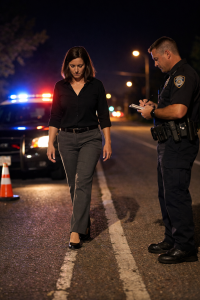
Michigan drug recognition experts, usually called DREs, are police officers trained to investigate suspected drug-impaired driving. In the right case, police may combine roadside observations, field sobriety tests, a DRE evaluation, and chemical testing to try to prove an OWI based on drugs. But those pieces of evidence do not all prove the same thing. Presence of a drug is not the same as actual impairment, and in marijuana cases that distinction matters a great deal.1234

What Is a Michigan Drug Recognition Expert?

Michigan drug recognition experts during roadside OWI investigationMichigan drug recognition experts are defined broadly by statute, but the courtroom question is usually more specific. Under MCL 257.625t, the term means a law enforcement officer trained to recognize impairment in a driver under the influence of a controlled substance rather than, or in addition to, alcohol.1 The Michigan State Police Drug Recognition Expert Program, however, describes a more structured certification path. MSP explains that applicants must complete SFST and ARIDE prerequisites, DRE classroom training, field certification training, and biannual recertification.2

Caduceus meetings are confidential twelve-step support groups designed exclusively for licensed healthcare professionals in Michigan navigating recovery from alcohol or substance use disorders. Unlike general AA or NA meetings, Caduceus groups restrict membership to licensed providers, which allows members to speak openly about workplace substance access, licensing board concerns, and the professional consequences of substance use with peers who face the same challenges.

What Are Caduceus Meetings?

If you’re a healthcare professional facing an DUI charge in Michigan, you may benefit from a specialized recovery support group designed specifically for medical professionals. Caduceus meetings are confidential 12-step support groups created exclusively for licensed healthcare providers struggling with chemical addiction and substance use disorders.

A Michigan OWI for doctors triggers two separate proceedings that move on different timelines and are evaluated by different decision-makers: the criminal case in court, and a licensing inquiry before LARA and the Board of Medicine that applies its own fitness and public safety standard regardless of how the criminal case resolves.

A conviction that appears manageable in criminal court can produce a licensing consequence that threatens the medical career, because the Board does not evaluate OWI conduct as an isolated lapse in judgment. It evaluates what the charge reflects about the physician’s fitness to practice and risk to patients.

What Legal Consequences Do Michigan Doctors Face for an OWI?

Many people ask us if you can get a DUI for being high. The answer is yes, you can get a DUI in Michigan for being high on Marijuana. If you use cannabis for medical or recreational purposes, you might wonder, “How do cops test for a weed DUI? Police officers will use the same kind of roadside tests used for one involving alcohol. So, from this perspective, there is little difference in a DUI with weed vs. alcohol.

What many drivers don’t realize is that you can be arrested for driving under the influence of marijuana even if you used it legally and hours earlier. Michigan law doesn’t set a legal limit for THC like it does for alcohol, so the decision to arrest often depends on the officer’s observations—things like your driving behavior, field sobriety test performance, and physical appearance. This creates a lot of legal gray areas, especially for people who use medical marijuana and may have residual THC in their system without being impaired.

Without getting to technical, one difference is that a DRE officer might be involved if the cops suspect marijuana impairment. Another difference is that there is currently no DUI breath test for weed.

Immediately upon your arrest for DUI in Michigan the arresting officer notifies the Secretary of State. This happens when the arresting officer destroys your plastic driver’s license and prepares a DI-177, which is entitled “Breath Blood or Urine Report Michigan Temporary Driving Permit.”  This document becomes your paper license and you will use it to drive until you are convicted or until your case is dismissed.  A DI-177 is only prepared if you agree to take a breath or blood test when asked by the arresting officer.

If you refused to submit to a breath or blood test then the officer will prepare a DI-93, which is entitled “Report of Refusal.” This too becomes your paper license but is only good for 14 days or until after you win your appeal hearing. Because you are not allowed to refuse a breath or blood test your license will be suspended for a year unless your Michigan DUI lawyer demands a hearing within this 14-day period.

Your Driving Record Shows Your DUI Arrest Even Before Conviction

Michigan drivers arrested under suspicion of intoxicated driving will have their bodily drug and alcohol levels tested by the police. When drugs including marijuana are suspected, a police officer will see if that distinct marijuana smell is present. Many OWI lawyers near  me wrongly believe that DUI cases involving blood tests can’t be defended. The Michigan DUI lawyers at the Barone Defense Firm alcohol, the police will take and test a blood sample. The forensic method used for blood testing is considerably more complicated. Our law firm however believe that in some ways blood test cases are easier to defend. This belief is born out of a comprehensive knowledge about this complex scientific method.

To help other lawyers understand forensic blood testing in DUI cases, the Michigan Association of OWI Attorneys (MIAOWIA) periodically presents seminars on this topic. Barone Defense Firm founding criminal defense attorney near me Patrick Barone, and Partner Michael Boyle, were both closely involved in the creation of MIAOWIA, and Mr. Boyle currently serves as an officer to the group.

As an example of Mr. Boyle’s expertise as well as his commitment to helping other lawyers get better at defending Michigan DUI cases involving blood test evidence, in early October 2021, he served as a host, moderator, and presenter for the Michigan Association of OWI Seminar on Blood Alcohol.  Mr. Boyle is an original member of MIAOWIA, which is membership dedicated to the education and training of attorneys throughout the State of Michigan in the complex litigation and representation of individuals charged with Operating Under the Influence of Alcohol and/or Drugs.

It can be difficult for a marijuana user to subjectively assess their level of impairment. Even worse, there is no way for a marijuana user to objectively evaluate their level impairment. So, after consuming marijuana medically or recreationally, how can a marijuana user make a safe decision about driving?

This uncertainty is what makes marijuana-related DUI charges in Michigan so complicated. You may feel fine to drive, but under the law, it’s not how you feel—it’s how your behavior is perceived and how well you can perform critical driving tasks. Unlike alcohol, where we have clear BAC limits, marijuana impairment is subjective and varies from person to person. That means two people could consume the same amount of cannabis, and one could be legally impaired while the other may not be—yet both could be arrested depending on how they appear during a traffic stop.

Before we get to that question, let’s do a quick review of Michigan’s OWI laws as it relates to drugs. In Michigan, you can be charged (and potentially convicted) if you are either impaired or intoxicated by alcohol, drugs, or any combination thereof.  Specifically, Michigan’s OWI law references impairment or intoxication caused by alcohol, controlled substance or “other intoxicating substance.” See Michigan Compiled Laws Sec. 257.625.

The Criminal Defense Attorney Association of Michigan (CDAM) has asked Michigan DUI Lawyer Patrick Barone to present a 1-hour Webinar to criminal defense lawyers seeking to learn about recent changes to Michigan law impacting how intoxicated driving cases are investigated at the roadside.

The seminar, entitled Michigan Law Update: Roadside Drug Testing – What You Need to Know, will include a detailed analysis of Michigan’s roadside saliva drug testing program. In this workshop, Mr. Barone will teach other lawyers how to address these preliminary screening tests in court, and how to avoid defense traps that may befall the unwary.

In recent years, law enforcement at all levels of government, State and National, have begun focusing on the investigation and arrest of drivers intoxicated by drugs other than alcohol. Interest in drugged driving has increased with the advent of medical and recreational marijuana, and the saliva swab roadside testing program is designed to facilitate drugged driving arrests.

Contact Information