Search
 Michigan Criminal Defense Lawyer Blog
Why a Serum Blood Alcohol Test Should Not Prove BAC in a Michigan DUI Case


Short answer: A hospital serum result may show that ethanol was detected and may have clinical value. But it does not, by itself, establish the driver’s whole-blood BAC. A prosecution number produced by applying a population conversion factor must include a scientifically defensible uncertainty range that accounts for the hospital measurement and the conversion itself.
A Serum Blood Alcohol Test Answers a Different Question
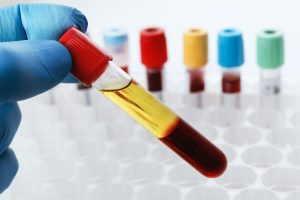 ospitals and forensic laboratories have different missions. An emergency department needs timely information that will help clinicians diagnose and treat a patient. A forensic laboratory is expected to produce evidence capable of supporting a criminal prosecution.
Those different purposes influence the specimen selected, the testing method, the degree of confirmation, the quality-control practices, and the way results are reported. Hospital laboratories commonly separate the liquid portion of blood and analyze serum or plasma with an automated enzymatic assay. Michigan forensic laboratories ordinarily analyze preserved whole blood by headspace gas chromatography with flame-ionization detection.
Both methods can produce useful information when properly performed. They do not, however, produce interchangeable numbers. A fuller explanation of how hospital results enter a criminal case appears in the firm’s article on hospital blood results in a Michigan DUI case. That legal-access question is separate from the scientific meaning of the number after the prosecution obtains it.
Why a Serum Blood Alcohol Test Produces a Higher Result
Whole blood contains plasma and cellular material, principally red blood cells. Serum is the liquid remaining after blood has clotted and the cellular material and clotting components have been removed. Plasma is also a liquid component, but it retains clotting factors.
Ethanol distributes primarily in the water portion of blood. Serum and plasma contain approximately 90 to 92 percent water by weight, while whole blood ordinarily contains about 78 to 80 percent. Because serum contains more water per unit of volume, the ethanol concentration in serum is ordinarily higher than the concentration in an equal volume of whole blood.
The modern review by Alan Wayne Jones and Christopher Tilson explains that the expected average serum-to-whole-blood or plasma-to-whole-blood ratio is approximately 1.15 to 1. That average agrees with much of the empirical literature. But an average relationship does not identify the correct relationship for a particular patient at a particular time.1
Why Serum Blood Alcohol Test Conversion Is Uncertain
A simple conversion divides the serum blood alcohol test result by a selected ratio. If a hospital reports a serum concentration of 0.160 g/dL, division by 1.18 produces an estimated whole-blood concentration of approximately 0.136 g/dL. Division by 1.10 produces approximately 0.145 g/dL. Division by 1.25 produces 0.128 g/dL.
The arithmetic is easy. Selecting and defending the divisor is not.
Published studies have reported different mean ratios and different ranges. Winek and Carfagna reported a mean serum-to-whole-blood ratio of 1.14, with observed values from 1.09 to 1.18. Hak and colleagues reported a mean of 1.15 and a range from 1.10 to 1.25. Charlebois and colleagues studied 235 subjects and reported ratios from 1.04 to 1.26. These are population findings, not measurements of the conversion ratio in the accused person.8
The most directly relevant clinical-forensic comparison involved 212 trauma-center patients. The hospital measured serum with an enzymatic method, while a forensic laboratory measured simultaneously collected whole blood by headspace gas chromatography. The investigators found that the ratio was concentration-dependent, with average values ranging from about 1.12 to about 1.18. They concluded that this variation precluded a generally applicable single conversion factor, although a regression model could generate prediction intervals.2
The central scientific problem
A serum result does not become a whole-blood measurement merely because someone divides it by 1.14, 1.18, or 1.20. The resulting number remains a model-based estimate. The prosecution must explain why the selected model applies and how uncertain the estimate is.
Individual Biology Changes the Conversion
The serum-to-whole-blood relationship depends largely on the distribution of water between the liquid and cellular portions of blood. Hematocrit, the proportion of blood volume occupied by red blood cells, is relevant because it affects the water content of whole blood.
Age, sex, pregnancy, anemia, polycythemia, hydration, blood loss, and other medical conditions may influence hematocrit or blood-water content. In a crash case, the patient may also have experienced hemorrhage, shock, or substantial fluid resuscitation before the sample was collected. These circumstances may change the relationship that a population-average conversion assumes.
Hematocrit alone does not necessarily solve the problem. Some studies have found little useful correlation between hematocrit and the observed serum-to-whole-blood ratio. The scientifically responsible conclusion is therefore not that one laboratory value automatically supplies a patient-specific conversion. It is that the patient’s clinical condition and the complete laboratory record must be examined before any forensic opinion is offered.
How a Hospital Serum Blood Alcohol Test Differs from Forensic Testing
Many hospital laboratories measure serum ethanol through an alcohol dehydrogenase enzymatic reaction. The analyzer measures a chemical response associated with the reaction and uses calibration data to report an ethanol concentration. A forensic laboratory using headspace gas chromatography separates volatile compounds and identifies and quantifies ethanol through chromatographic data.
An enzymatic assay can be accurate and precise within its validated clinical use. That does not establish that the particular result is sufficiently specific, confirmed, and documented for a criminal prosecution. The court should examine the actual analyzer, reagent system, calibration, controls, reportable range, interference studies, maintenance, specimen integrity, and performance on the day of testing.
The 2007 trauma-center study illustrates the concern. Its hospital laboratory was accredited and operated a calibrated analyzer under written quality controls. Even under those conditions, the researchers identified a false-positive serum result associated with a markedly lipemic sample. The result was discovered only through the research comparison. The authors warned that an opinion should not be given without review of the complete medical record and relevant quality-assurance materials.2
Interference claims must nevertheless be case-specific. Older literature raised concerns about lactate and lactate dehydrogenase in trauma patients. Later work reviewed by Jones and Tilson indicates that modern assays ordinarily require unusually high concentrations before this mechanism produces a meaningful false ethanol result. The defense should investigate the actual assay and the patient’s laboratory values rather than claim that trauma or lactated Ringer’s solution automatically invalidates every result.1
Single Clinical Testing Provides Less Forensic Confirmation
Forensic alcohol testing commonly uses replicate measurements and evaluates their agreement. Replicate testing helps demonstrate precision and may expose sample preparation errors, instrument instability, or an anomalous result.
Hospital testing is commonly performed once because the clinical objective is prompt treatment. A single measurement is not necessarily incorrect. But it provides less information about repeatability in the individual sample. If the remaining specimen was discarded under the hospital’s retention policy, independent confirmation may be impossible.
The distinction matters because population studies that used duplicate or triplicate measurements under controlled research conditions cannot automatically transfer their narrow analytical performance to a solitary clinical result produced during emergency treatment. The conditions that made the research reliable must exist, or their absence must be included in the uncertainty analysis.
Why a Serum Blood Alcohol Test Needs an Uncertainty Budget
Every measurement carries uncertainty. An uncertainty budget identifies the material sources of uncertainty, estimates their magnitude, and combines them into a range associated with a stated level of confidence. A reported value without its uncertainty can create a false appearance of exactness.
A converted serum blood alcohol test requires more than the uncertainty of the hospital analyzer. At minimum, the analysis must address two distinct layers:
- Analytical uncertainty: uncertainty arising from specimen collection and processing, calibration, reagents, instrument performance, repeatability, bias, interferences, and reporting.
- Conversion uncertainty: uncertainty arising from biological variation and the statistical model used to estimate whole-blood alcohol from serum or plasma alcohol.
Those components cannot be treated as unrelated footnotes. The prosecution’s final number depends on both. The uncertainty of the converted estimate must therefore propagate the uncertainty of the original clinical result through the conversion and add the uncertainty associated with the conversion model itself.
Attorney insight
The decisive question is not whether a calculator can produce a converted number. It is whether the prosecution can state, with a defensible confidence level, the range within which the person’s whole-blood concentration was likely to fall. A bare number such as 0.14 conceals the very uncertainty that determines what the evidence proves.
Peer-reviewed forensic literature recognizes this requirement. Gullberg constructed an uncertainty budget for whole-blood ethanol measured by headspace gas chromatography that included analytical and traceability components as well as variation in blood-water content.3 Jones and Tilson likewise recommend reporting either a conservative value or a range associated with a stated statistical confidence when a result will be used under a per se criminal statute.1
A hospital report usually does neither. It reports a clinical serum blood alcohol test result. A later witness may apply an average divisor, but that is not a combined uncertainty budget and does not disclose the probability that the accused person’s true whole-blood concentration was below a statutory threshold.
Does Dividing the Serum Result by 1.20 Solve the Problem?
Jones and Tilson recommend dividing a hospital serum or plasma ethanol result by 1.20 for legal purposes. Based on the distribution data they reviewed, they characterize that approach as conservative and estimate a 0.05 percent chance of overestimating the coexisting whole-blood concentration.1
That recommendation is important and should be addressed candidly. It undermines an absolute claim that a serum blood alcohol test can never be interpreted. It does not establish that every converted hospital result is automatically admissible or proves a precise BAC.
First, the 1.20 recommendation addresses conversion conservatism at a population level. It does not validate the hospital’s original measurement in the individual case. Second, it assumes the specimen, units, assay, calibration, quality controls, and patient circumstances are suitable for the comparison. Third, a conservative point estimate still does not disclose the complete uncertainty of the underlying measurement. Finally, a prosecution expert must explain the basis, limitations, and reliable application of the method rather than simply announce a converted number.
Other researchers have proposed prediction intervals instead of a fixed divisor. Rainey demonstrated how a serum result could correspond to a wide range of whole-blood values when a high confidence level is required. Barnhill and colleagues used regression to estimate lower prediction limits and emphasized that the uncertainty depends on the measured serum concentration.2 These approaches reinforce the same point: scientifically responsible interpretation produces a range or a conservative bound, not false decimal-point certainty.
Michigan Requires an Equivalent Whole-Blood Result
Michigan’s per se OWI law states alcohol thresholds in grams per 100 milliliters of blood. Mich. Comp. Laws § 257.625. The administrative rule governing biological alcohol testing is more explicit: “Serum or plasma alcohol concentrations shall be expressed as an equivalent whole blood alcohol concentration.” Mich. Admin. Code R. 325.2672(2).4
The rule requires an equivalent whole-blood concentration. It does not identify a universal conversion factor, prescribe a validated regression model, or excuse the proponent from establishing scientific reliability. A hospital’s unconverted serum value therefore does not satisfy the rule merely because the medical chart labels it as an “alcohol level.”
Nor should the prosecution be permitted to cure the problem through unsupported lay arithmetic. The Illinois Supreme Court reached a useful analogous conclusion in People v. Heineman. It held that testimony applying a regulatory serum-to-whole-blood conversion required expert knowledge and could not be supplied as ordinary lay testimony. The case applies Illinois law, not Michigan law, but it correctly recognizes that conversion is a scientific interpretation rather than simple arithmetic.5
People v. Perlos Does Not Validate Serum Science
People v. Perlos is often cited when a Michigan prosecutor obtains a hospital alcohol result after a crash. The Michigan Supreme Court upheld the statutory procedure permitting the prosecutor to obtain a treatment-related chemical-analysis result under specified circumstances.6
Perlos addressed privacy, state action, and government access to the medical result. It did not determine whether a particular hospital used serum, whether its assay was forensically reliable, which conversion model should be used, or how the uncertainty of a converted whole-blood estimate should be calculated.
Lawful acquisition does not establish scientific meaning. A result may be obtainable under Perlos and still lack the foundation required to prove a particular whole-blood concentration. These issues should remain separate in both motion practice and trial strategy.
Why MRE 702 Makes the Conversion an Admissibility Question
Michigan Rule of Evidence 702 requires the proponent of expert testimony to demonstrate to the court that it is more likely than not that the testimony rests on sufficient facts or data, results from reliable principles and methods, and reflects a reliable application of those principles and methods to the facts of the case. The rule was amended effective May 1, 2024, to emphasize the proponent’s burden and the court’s gatekeeping responsibility.7
A witness who converts a serum blood alcohol test is offering an expert opinion about the accused person’s whole-blood alcohol concentration. The court should therefore require the prosecution to establish:
- the precise specimen type and units reported by the hospital;
- the analytical method and its validation for ethanol;
- the calibration, controls, maintenance, and quality-assurance records for the test;
- the assay’s analytical uncertainty and material interference limitations;
- the patient’s relevant clinical and hematological circumstances;
- the scientific basis for the chosen conversion method;
- the prediction interval or uncertainty associated with that conversion; and
- the combined uncertainty of the final claimed whole-blood value.
If the prosecution cannot establish those matters, the court should exclude the converted number as unreliable quantitative proof. At minimum, the prosecution should not be allowed to present the serum result as though it were a directly measured whole-blood BAC or compare it to 0.08 or 0.17 without a proper scientific foundation.
What Records Are Needed to Challenge a Serum Blood Alcohol Test?
The one-page medical report is not enough. A scientifically meaningful review may require the complete laboratory and treatment record, including:
- the test order, collection time, result time, specimen type, units, and reference interval;
- the manufacturer and model of the analyzer;
- the laboratory’s ethanol procedure and instrument instructions;
- reagent lot information, calibration records, controls, proficiency testing, and maintenance records;
- the reportable range, limit of quantitation, precision, bias, and interference data;
- whether the specimen was tested once or in replicate;
- hematocrit, hemoglobin, lipid, lactate, lactate dehydrogenase, and other relevant laboratory values;
- blood loss, shock, intravenous fluids, medications, and the timing of treatment;
- the specimen-retention and disposal policy; and
- the conversion formula, source literature, calculations, and uncertainty analysis used by any prosecution expert.
However, obtaining this information can be exceedingly difficult in a criminal case unless ordered by a Judge. Also, as is most often the case, if a separate police sample was collected and tested by gas chromatography, the defense should obtain the chromatograms and complete analytical batch. The firm’s article on gas chromatography in Michigan DUI blood cases explains why the final forensic report is only the beginning of that review.
What a Serum Blood Alcohol Test Can and Cannot Prove
A serum blood alcohol test may support the conclusion that ethanol was present. Depending on the test, the medical records, and the magnitude of the result, it may also have limited qualitative value concerning alcohol exposure or possible impairment.
But presence is not the same as proof of a statutory concentration. A per se DUI prosecution asks whether the government proved that the accused had at least a specified alcohol concentration. That conclusion requires a reliable quantitative measurement or estimate, not merely a clinical result that trends in the same direction.
The distinction becomes especially important near Michigan’s 0.08 threshold, the 0.17 high-BAC threshold, or another legally significant dividing line. It also matters when an expert proposes to use the converted number as the starting point for retrograde extrapolation. Back-calculation cannot repair uncertainty in its starting value. It adds another layer of assumptions.
How Serum Blood Alcohol Evidence Should Be Presented to a Court
The scientifically responsible presentation begins with the hospital’s actual serum blood alcohol test result, correctly identified as serum or plasma. It then explains the assay’s uncertainty, the biological basis for conversion, the selected model, and the uncertainty associated with that model. The final opinion should be expressed as a conservative bound or a range at a stated confidence level.
What should not happen is more common: the hospital reports one number, an expert divides it by a familiar average, and the converted result is presented to the jury as the driver’s BAC. That sequence hides both the biological variability and the uncertainty of the original test.
Courts sometimes characterize attacks on chemical testing as matters of weight rather than admissibility. But MRE 702 does not permit that phrase to replace gatekeeping. When the prosecution offers an expert-derived conversion as proof of a precise statutory BAC, reliability of the method and its application is an admissibility question for the judge before it becomes a weight question for the jury.
Frequently Asked Questions About Serum Blood Alcohol Tests
Is a hospital serum alcohol result always wrong?
No. A properly performed hospital assay may be useful and may accurately measure ethanol in serum for its clinical purpose. The problem arises when that serum concentration is treated as though it directly measured whole-blood BAC for a criminal prosecution.
Can serum alcohol be converted to whole-blood BAC?
It can be estimated through a conversion factor or statistical model. But the estimate is not a direct measurement, and different approaches produce different values and levels of confidence. The method must be scientifically justified and its uncertainty disclosed.
What is an uncertainty budget?
An uncertainty budget identifies and quantifies the important sources of uncertainty affecting a result. For a converted serum result, it should include uncertainty from the hospital analysis and uncertainty from estimating whole-blood alcohol from serum. For additional information review Barone’s Michigan Bar Journal Article explaining why Breath and Blood Tests in Michigan fail to meet admissibility requirements.
Does People v. Perlos make hospital serum results scientifically admissible?
No. Perlos principally addresses when prosecutors may obtain a treatment-related hospital test result. It does not validate a serum assay, select a conversion method, or calculate measurement uncertainty.
Why does the difference matter if the serum result is very high?
A high result may make some threshold disputes less decisive, but the government must still describe the evidence accurately. The scientific issues may also affect the credibility of the number, any high-BAC enhancement, an extrapolated value, or the weight assigned to the chemical evidence when it conflicts with the person’s observed behavior. That latter issue is discussed in the firm’s article on the disconnect defense in Michigan DUI cases.
Facing a Michigan DUI Case Involving Hospital Blood?
A hospital alcohol number should never be accepted without determining what specimen was tested, how it was tested, and what the reported number can scientifically prove. Barone Defense Firm examines the medical records, laboratory method, conversion evidence, and uncertainty behind the prosecution’s claim.
Call 1-877-ALL-MICH (877-255-6424) for a confidential consultation about a Michigan DUI or OWI case involving a hospital blood test.
About Patrick T. Barone
Patrick T. Barone is the founding and managing partner of Barone Defense Firm and has focused his career on defending Michigan DUI and serious driving cases. He holds a Bachelor of Science degree in biology with a pre-medical concentration and has written extensively about the law and science of alcohol testing. He is the author of Defending Drinking Drivers, has contributed to multiple legal treatises and professional publications, and has taught lawyers nationally about scientific evidence, trial advocacy, and DUI defense. Barone Defense Firm represents clients throughout Michigan and brings more than 85 years of collective experience to complex criminal cases.
This article provides general information and does not constitute legal or scientific advice for a particular case. The reliability and admissibility of any test depend on the complete record, the method used, and the governing law.
Sources and Endnotes
- Alan Wayne Jones & Christopher Tilson, Distribution Ratios of Ethanol and Water Between Whole Blood, Plasma, Serum, and Erythrocytes: Recommendations for Interpreting Clinical Laboratory Results in a Legal Context, 68 J. Forensic Sci. 9, 9–21 (2023), https://doi.org/10.1111/1556-4029.15164. ↩
- Matthew T. Barnhill Jr., Donald Herbert & David J. Wells Jr., Comparison of Hospital Laboratory Serum Alcohol Levels Obtained by an Enzymatic Method with Whole Blood Levels Forensically Determined by Gas Chromatography, 31 J. Analytical Toxicology 23, 23–30 (2007), https://pubmed.ncbi.nlm.nih.gov/17389080/. ↩
- Rod G. Gullberg, Estimating the Measurement Uncertainty in Forensic Blood Alcohol Analysis, 28 J. Analytical Toxicology 456, 456–61 (2004), https://pubmed.ncbi.nlm.nih.gov/15516296/. ↩
- Mich. Comp. Laws § 257.625; Mich. Admin. Code R. 325.2672(2). ↩
- People v. Heineman, 2023 IL 127854, ¶¶ 70–92. ↩
- People v. Perlos, 436 Mich. 305, 313–31, 462 N.W.2d 310 (1990). ↩
- Mich. R. Evid. 702; Mich. Sup. Ct. ADM File No. 2022-30 (Mar. 27, 2024). ↩
- Charles L. Winek & Mark Carfagna, Comparison of Plasma, Serum, and Whole Blood Ethanol Concentrations, 11 J. Analytical Toxicology 267, 267–68 (1987), https://doi.org/10.1093/jat/11.6.267; E.A. Hak et al., Determination of Serum Alcohol: Blood Alcohol Ratios, 28 Can. Soc’y Forensic Sci. J. 123, 123–26 (1995), https://doi.org/10.1080/00085030.1995.10757475; R.C. Charlebois, M.R. Corbett & J.G. Wigmore, Comparison of Ethanol Concentrations in Blood, Serum, and Blood Cells for Forensic Application, 20 J. Analytical Toxicology 171, 171–78 (1996), https://doi.org/10.1093/jat/20.3.171. ↩